If you rent near UCF, along Alafaya Trail, off Research Parkway, or anywhere in the dense student-apartment corridor between University Boulevard and Waterford Lakes, you already know the rhythm of the place. Leases turn over fast, roommates come and go, and half the units sit empty for weeks every summer while people head home or study abroad. That combination is exactly what mold likes, and it is why I get so many calls from tenants in Union Park, Avalon Park, and east Orange County who open the door in August to a musty unit and a landlord who is slow to pick up the phone.
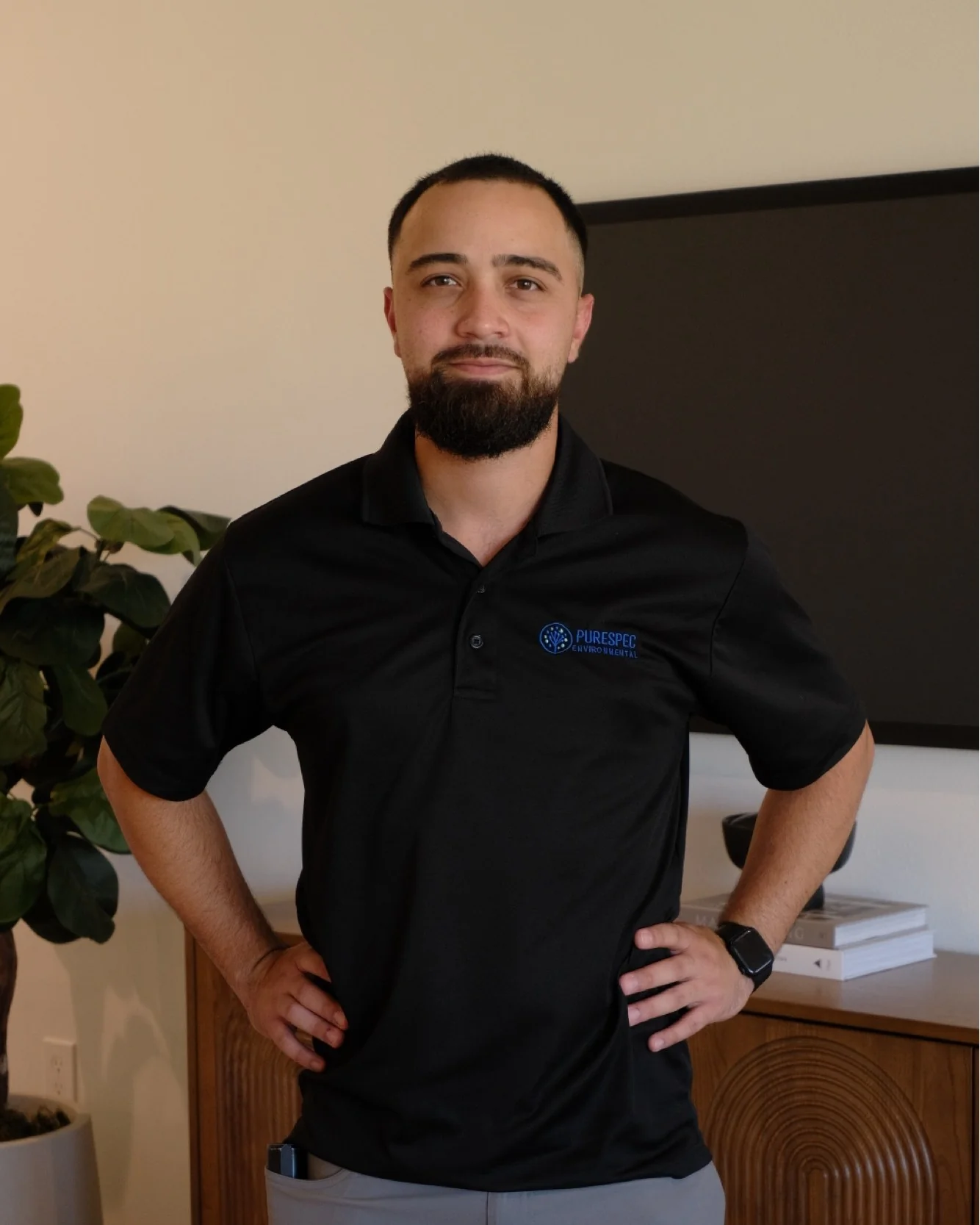
I am a licensed Florida Mold Assessor and a microbiologist, and PureSpec is assessment-only. I do not remediate, and I do not work for your landlord. My job is to walk your unit, measure what is actually happening, sample where it matters, and hand you a report that stands on its own. This guide covers what a renter in the Alafaya area can record themselves, and what an independent environmental assessment adds.
Why do UCF-area rentals sit in a high-risk category?
Central Florida runs warm and humid for most of the year, and indoor mold growth is driven by moisture more than anything else. When a summer sublet or a study-abroad vacancy gets closed up with the air conditioning off, or the thermostat set high to save on the electric bill, indoor humidity climbs into the range where surfaces stay damp enough for growth to begin. A few weeks of that on a closet wall or behind a bed is all it takes.
In UCF-area apartments, frequent occupancy changes and seasonal vacancies can give a small moisture condition more time to develop before anyone notices it. Delayed maintenance and unreported leaks have the same effect. Those are building-condition factors, and they are the reason a dated environmental record is useful.
Why appearance alone may not answer the environmental question?
A photograph can document discoloration, but it cannot measure moisture content or determine what a material is. Moisture readings, building-context observations, and laboratory analysis when warranted provide information that appearance alone cannot.
Independent third-party documentation is different. An assessment pairs a visual inspection with moisture readings tied to specific locations, and, where it is warranted, accredited-lab air and surface sampling that identifies what is present. Because PureSpec is neutral and independent of both landlord and tenant, the report is not an opinion in your favor, it is a record of conditions. That neutrality is the point.
What should your documentation checklist include?
Whether you are reporting a new concern or simply keeping a record, build a file. Here is what a useful environmental record looks like:
- A dated written record sent to the landlord or property manager describing what you found and where.
- Copies of the communications you sent and any replies you received.
- Your own photos of every affected area, wide shots and close-ups, with visible dates.
- A written log of odors, visible staining or suspected microbial growth, leaks, moisture events, and the date each condition was noticed.
- Any landlord responses, in writing, including promises to send someone and dates they were supposed to show.
- An independent assessment report with moisture readings, photos, and accredited-lab results where indicated.
- Move-in and move-out records (see below) so the sequence of observed conditions is documented.
If you want the smallest possible starting point, a limited-scope inspection focused on the one room or the one wall that concerns you often records what you need without inspecting the entire unit.
Why document the condition at move-in, during the tenancy, and at move-out?
Environmental conditions can change over time. Dated photographs, written maintenance communications, and an independent assessment can help establish what was observed at a particular point in time. That documentation does not determine legal responsibility, financial responsibility, lease rights, or security-deposit outcomes. Questions about those issues should be directed to a Florida landlord-tenant attorney or other qualified professional.
At move-in, photograph everything, note any musty smell or existing staining in writing, and send it to the landlord so it is on the record from day one. At move-out, do the same. If mold surfaced during your tenancy because of a building issue like a roof, plumbing, or an HVAC problem, an independent assessment can document the likely source. Responsibility for repairs or charges is a legal and contractual question that PureSpec does not determine.
What does a well-documented report contain?
When I inspect a rental near UCF, the deliverable is written for a non-expert and documents the basis for each finding. It includes photos of every relevant condition, moisture data tied to specific locations, an evaluation of likely sources, and, when sampling is indicated, results from an accredited laboratory with the analysis explained in plain English. It carries my name and my Florida license number.
That is the difference between a report and a snapshot. If you want to understand the distinction before you book, my piece on inspection versus testing breaks it down, and tenant mold documentation in Florida covers what to record as a renter.
How to start
If you rent in the UCF, Waterford Lakes, Union Park, or Avalon Park area and something feels off, get ahead of it. Call me at (321) 324-7756 or email through the site to book an assessment, and I will help you figure out whether a limited-scope look or a fuller inspection fits your situation. I serve renters across Orlando and Oviedo and the rest of east Orange County. We scope the assessment to the unit, the areas of concern, and the environmental question that needs to be answered.
Standard coverage includes Orange, Seminole, Lake, Osceola and Polk counties. For properties outside these counties, contact PureSpec for a written quote before booking. Any travel charge is disclosed in your written quote.
This article is general education about environmental assessment and testing only. PureSpec provides mold inspection and testing, not remediation, and nothing here is medical or legal advice. For health concerns, see a licensed healthcare provider, and for legal remedies, consult a Florida landlord-tenant attorney.