
Orange County · Central Florida
Mold Inspection & Mold Testing in Orlando, Florida.
Mold inspection and testing in Orlando, founder-performed by Daniel Melendez, a microbiologist and former environmental lab analyst. Lab-supported, independent of remediation, with most Orlando inspections scheduled within 48 hours.

What is mold inspection in Orlando?
A mold inspection in Orlando is the structured assessment of a home or commercial property to identify mold growth, moisture sources, and indoor air quality conditions. The process combines a visual walk-through of every accessible space, moisture-meter readings on each suspect surface, thermal imaging that flags surface-temperature patterns worth confirming with a moisture meter, an evaluation of the air conditioning system, and attic access where it is safe. Three accredited-laboratory samples are included and collected where the findings call for them rather than to a fixed formula. Everything is documented in a written report with photographs, instrument data, and laboratory results. Every inspection is performed personally by Daniel Melendez, a microbiologist and Florida-licensed mold assessor. PureSpec performs environmental assessment and testing only. It never performs remediation. The report is written so that a non-expert can follow the reasoning behind each conclusion.

Where we work in Orlando
From single-family homes to commercial buildings.
-

RESIDENTIAL Residential Mold Inspection
Single-family homes, townhouses, and condos across Orlando, full-property and limited-scope assessments by a state-licensed mold assessor.
-

COMMERCIAL Commercial Mold Assessment
Office, retail, healthcare, school, and hospitality buildings across the Orlando metro, reporting structured for property managers, insurers, and OSHA-aware contexts.
-

APARTMENT Apartment / Tenant Mold Inspection
Independent third-party documentation built for renters dealing with landlords and property managers across Orlando-area multifamily housing.
Services explained
Mold inspection and specialty testing in Orlando, what each service answers.
If you’re reading this, something is going on in your Orlando home or rental, or with how you feel inside it, and you want a straight answer. Below is what each PureSpec service is built to answer, in the language of the question you’re actually asking. Every service is performed personally by Daniel Melendez, a microbiologist and former environmental lab analyst, and every sample ships to an AIHA-LAP-accredited third-party laboratory under chain-of-custody.
Matching the service
Which inspection fits which Orlando situation.
- You smell it but cannot find it. An entire-property inspection is the right instrument. Every accessible space, moisture mapped, thermal scanned, HVAC opened up, with laboratory samples taken where the findings call for them rather than at random.
- You already know the room. A limited-scope inspection documents one defined area properly instead of paying for a whole-house walk you do not need.
- The air handler is in the attic and the ceiling below it is stained. That is an HVAC assessment question before it is a mold question. The coil, the pan, the condensate line and the plenum tell you whether the ceiling is a symptom or the source.
- A contractor has finished and you want it verified. Post-remediation verification is the independent clearance step, and because PureSpec never remediates, the verification is not being performed by anyone with an interest in it passing.
- Your physician asked for specific laboratory data. ERMI, HERTSMI-2 and mycotoxin panels are collected to protocol and the results go to your provider to interpret.
- You are buying, and the disclosure is thin. A pre-purchase inspection reads the building before the contingency period closes, which in a market moving as fast as Orlando's is usually a matter of days rather than weeks.
If you are not sure which of those describes your situation, the phone call sorts it out faster than a form. Matching the test to the question is most of the value of working with an assessor rather than ordering a sample.
Inspection vs testing
What is the difference between a mold inspection and a mold test?
A mold inspection is an investigation of the building. A mold test is a laboratory analysis of a sample taken from it. The two answer different questions, and one is not a substitute for the other.
The inspection is where the answer usually comes from: the moisture conditions, the building envelope, the plumbing, the air conditioning system, and the history of where water has physically travelled. Sampling is one component of that work, used when field conditions indicate it will answer something the inspection alone cannot. Where sampling is warranted, results are interpreted against the conditions observed rather than read in isolation.
This is why PureSpec does not sell a standalone air sample as a complete assessment. If you want the detail, the mold testing service page covers what each sampling method establishes and where each one stops.
| Your question | What answers it | What it will not tell you |
|---|---|---|
| Is there mold, and where? | A building inspection: moisture, envelope, plumbing, HVAC, water history | Species or spore concentration without sampling |
| What is airborne right now? | Spore-trap air sampling against a same-day outdoor reference | Whether growth is concealed in an assembly |
| Is this patch mold? | A surface or tape-lift sample from that specific patch | How far it extends behind the surface |
| Why does the air feel wrong? | An indoor air quality investigation, broader than mold | Whether any reading caused a symptom |
| Did the remediation work? | Post-remediation verification before containment comes down | Whether the moisture source was corrected |
Air testing
Do you do mold air testing in Orlando?
Yes, when it is the right instrument for the question. Air sampling draws a measured volume of air through a spore trap, and an accredited laboratory identifies and counts what it captured. An indoor result is interpreted against an outdoor reference sample collected the same day, because outdoor air in Central Florida carries its own spore load.
What an air sample can do is describe airborne conditions in the sampled area during the sampling period. What it cannot do is establish that a building is free of concealed growth. Mold does not release spores continuously, so a wall cavity, a subfloor or an air-handler closet can hold active growth while a sample taken in the room reads unremarkable. Recent cleaning, whether the system was running, and how long the building had been closed up all influence the result.
That is not a reason to skip sampling. It is the reason sampling follows the inspection rather than replacing it. If an air test has already come back unremarkable and the building still does not feel right, this article covers what that result does and does not rule out.
Air is also not the only thing worth sampling. Where there is visible growth-like material, a stained surface, or a specific building assembly in question, a surface sample taken directly from that material answers a question an air sample cannot: what is actually on it. Swab, tape-lift and bulk methods each suit different materials, and wall-cavity sampling reaches spaces that room air does not represent. Which combination applies is decided at the property, from what the inspection finds, not booked in advance from a menu. The mold testing page sets out what each sampling method establishes and where each one stops.
Moisture
How do you find moisture you cannot see?
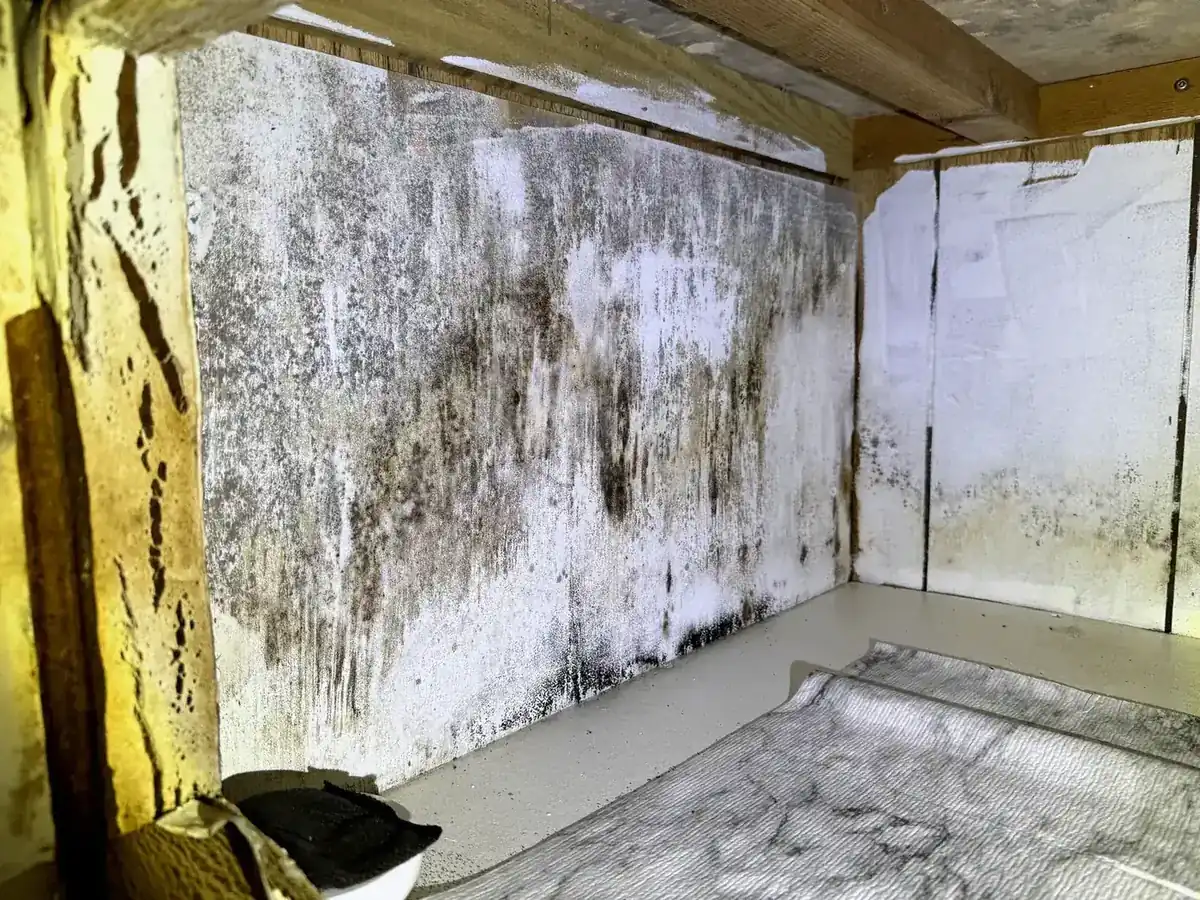
Mold growth follows moisture, so the investigation is a moisture investigation first. In Orlando properties the sources worth checking generally include roof and flashing details, window and door assemblies, plumbing supply and drain lines, shower and tub enclosures, condensation on cool surfaces, air-conditioning condensate, and elevated indoor humidity with no liquid water involved at all.
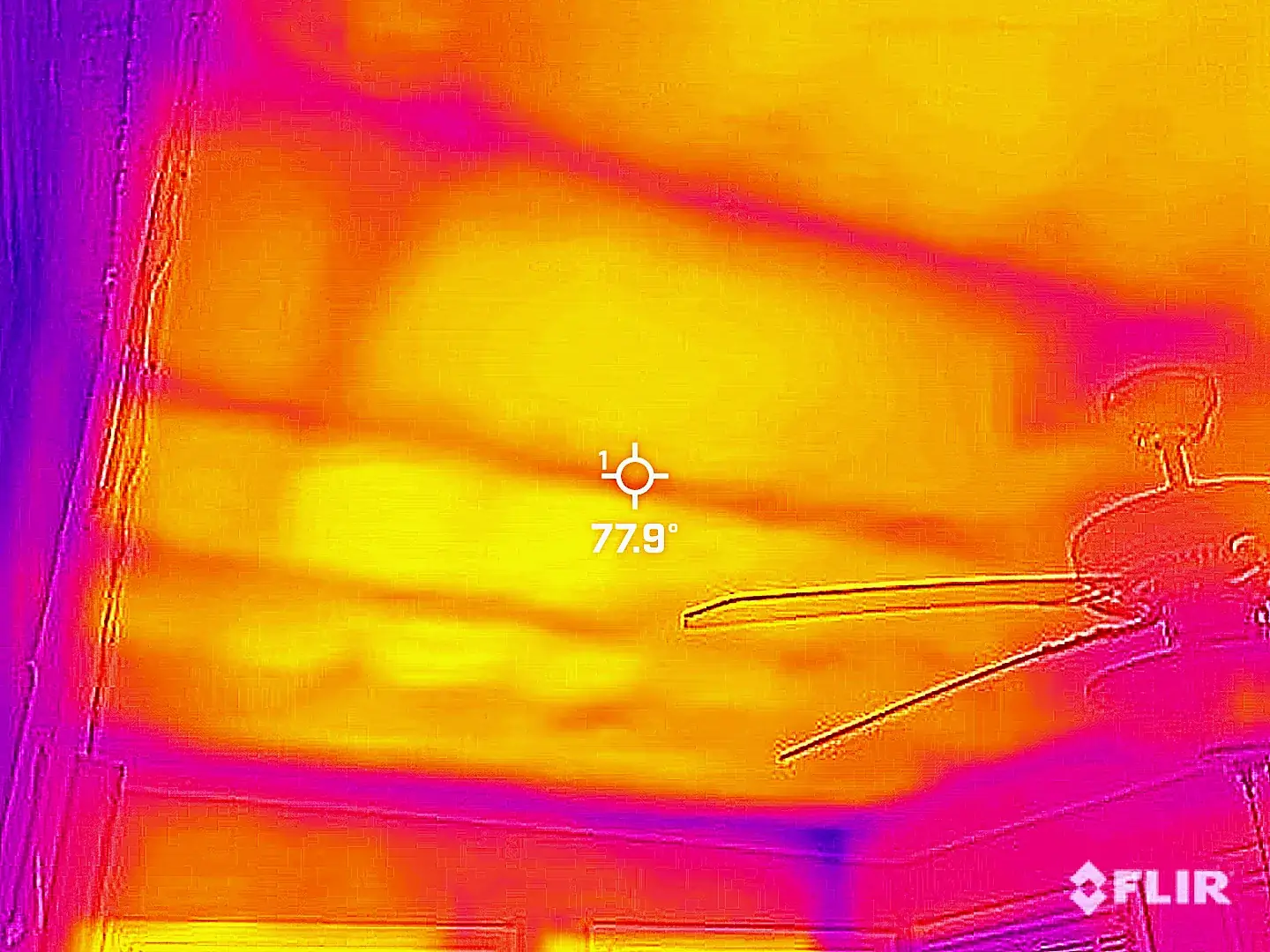
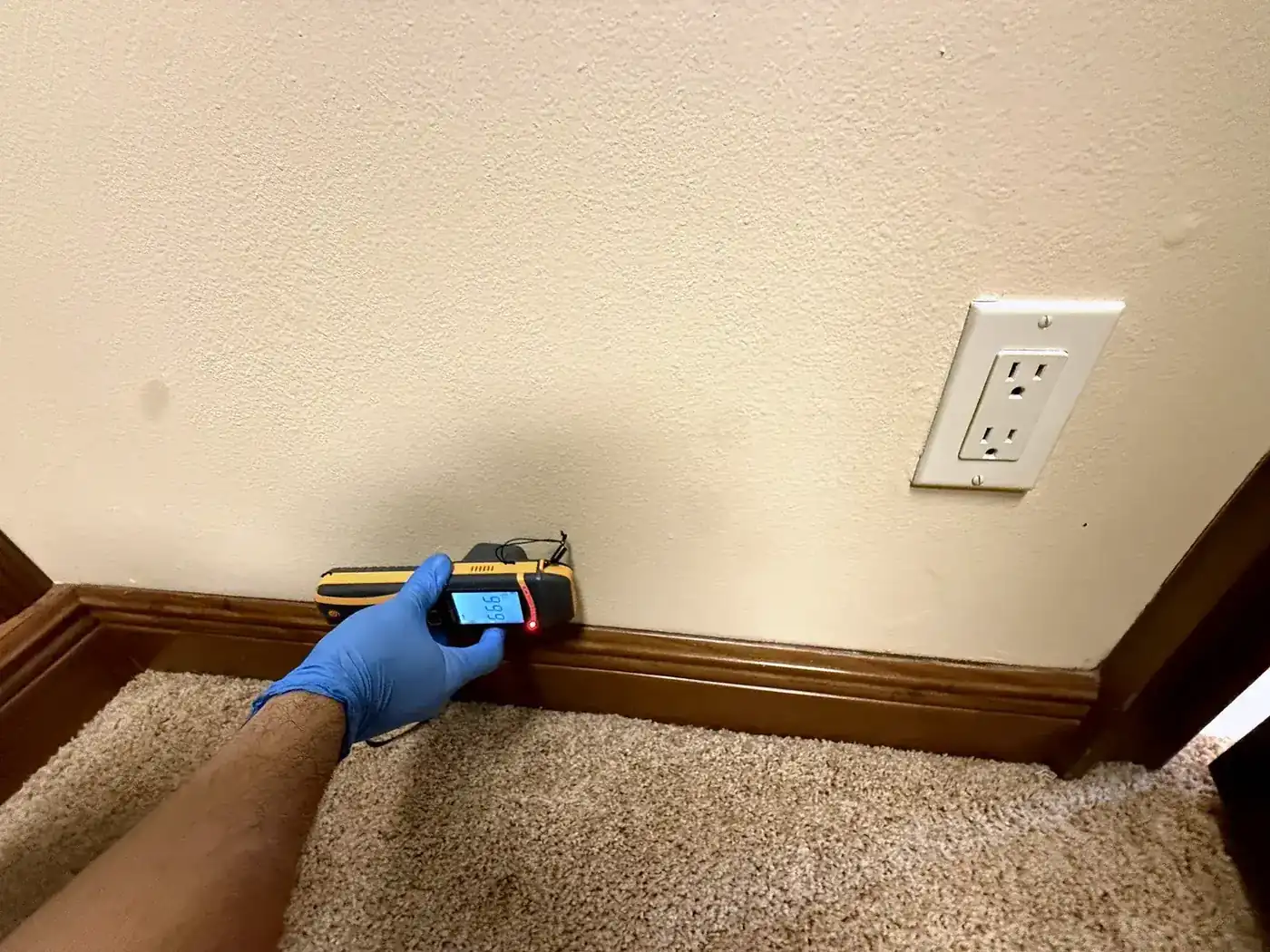
Three tools support that work, and it is worth being precise about what each one does:
- Thermal imaging reads surface temperature. It shows thermal anomalies that may warrant further evaluation. It does not detect moisture, and it does not detect mold.
- Moisture meters read moisture content or its electrical proxy in a material. They indicate whether a material is wet. They do not identify mold.
- Psychrometric readings of temperature, relative humidity and dew point describe the conditions the building is operating in, which is often what explains a recurring problem better than any single reading.
Used together they narrow where to look. None of them confirms mold, and a non-invasive assessment cannot rule out every concealed condition. The US EPA takes the same position in A Brief Guide to Mold, Moisture and Your Home: the key to mold control is moisture control, and where growth is already visible, sampling is generally unnecessary.
HVAC
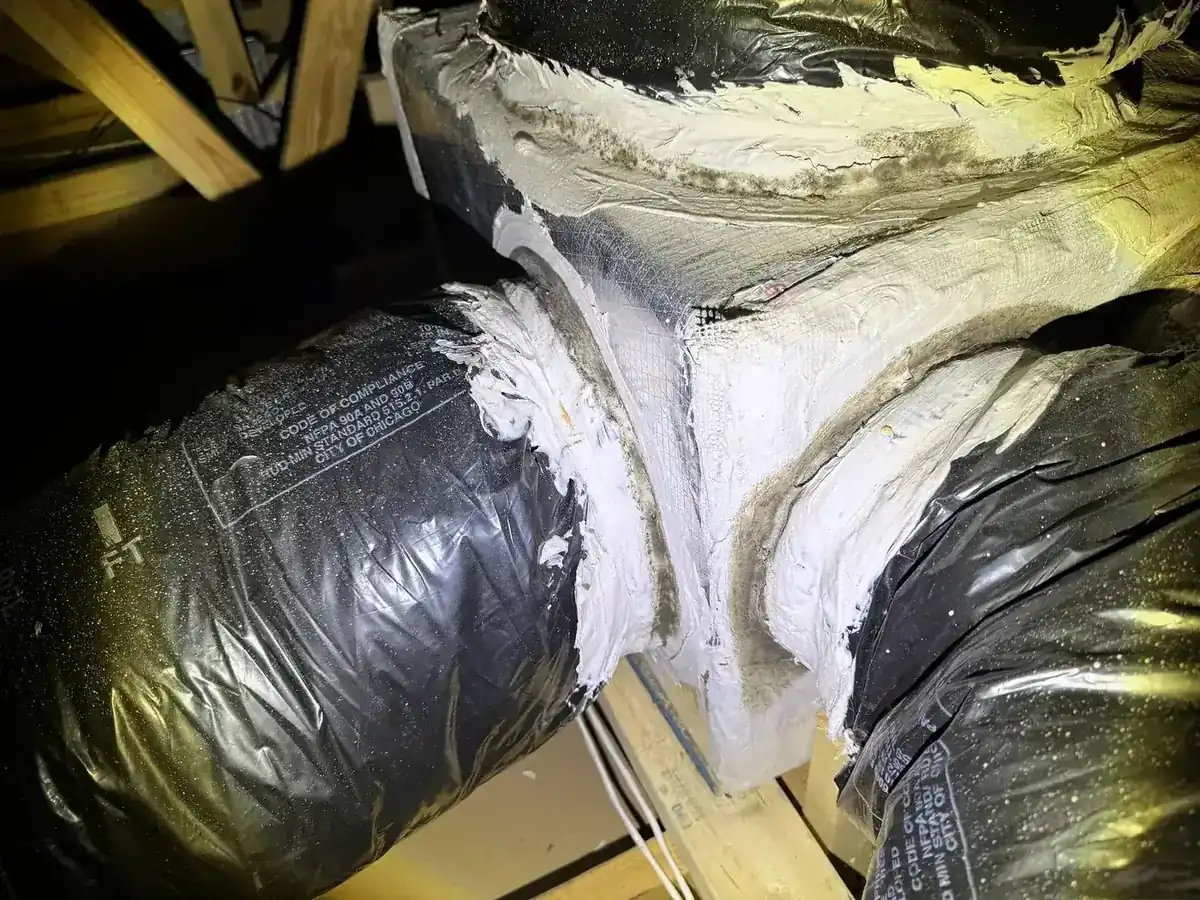
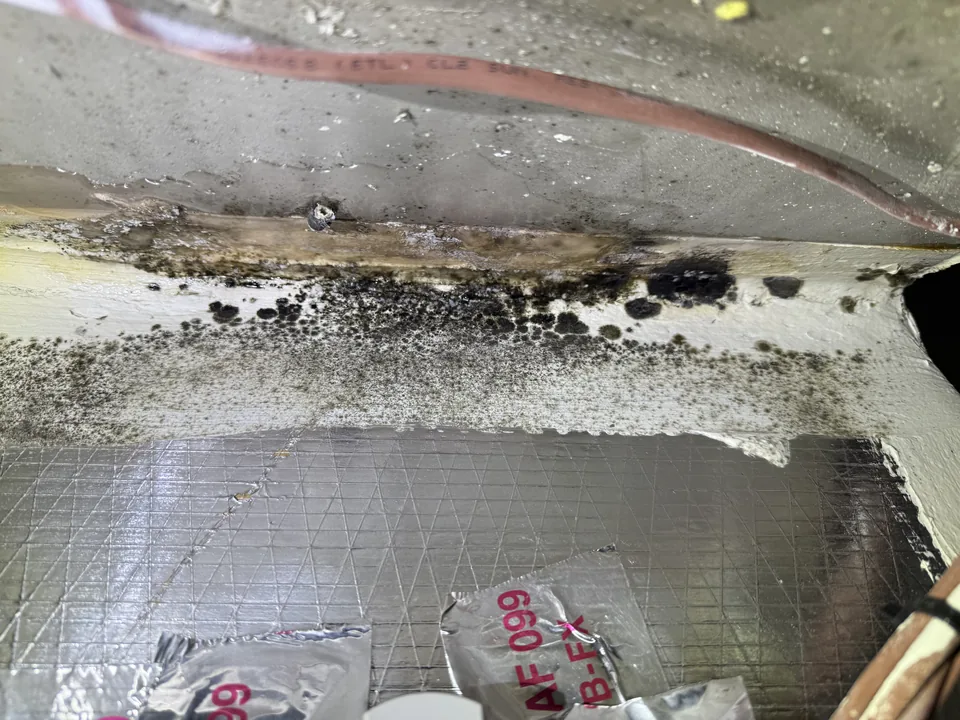
Can an air conditioning system cause a mold problem?
Central Florida runs a long cooling season, which means mechanical systems carry much of the humidity load for much of the year. That makes the air-handling equipment worth examining on its own terms rather than treating it as an afterthought.
Within the scope of an environmental assessment, and limited to accessible components, that generally includes the condition of the air handler and its cabinet, condensate collection and drainage, filter fit and evidence of air bypassing the filter, visible particulate or debris accumulation, moisture or condensation on surfaces, and the relationship between how the system runs and the indoor humidity it produces.
Where visible growth-like material is present it is described as microbial-like growth unless laboratory analysis confirms otherwise. PureSpec performs environmental assessment, not HVAC mechanical diagnostics or repair. If what you are seeing is discoloration at the supply vents themselves, this article covers what that usually turns out to be in Orlando homes. The HVAC assessment page covers the scope in detail.
Indoor air quality
Do you offer indoor air quality testing in Orlando?
Not every indoor air complaint is a mold complaint. Occupants report headaches, odors, irritation or a general sense that the air is wrong in buildings where mold sampling comes back unremarkable, and in those cases the useful question is broader than mold. Where the complaint is specifically an odor, this Orlando investigation walks through how that gets traced.
An indoor air quality investigation looks at the building and the conditions it operates in, and can include readings such as temperature, relative humidity, dew point, carbon dioxide and airborne particulate, alongside laboratory testing where the situation warrants it. One distinction matters: on-site instrument readings are screening. They indicate whether a condition is worth pursuing, not what any specific compound is, and no screening result establishes that a building is safe or unsafe. Full detail is on the indoor air quality testing page.
New construction
Should a newly built Orlando home be tested for VOCs or formaldehyde?
Materials and products used in construction and renovation, including composite wood products, cabinetry, flooring, adhesives, coatings and furnishings, can emit volatile organic compounds, and some products can contribute formaldehyde emissions.
What that does not mean is that a new home has an air quality problem. Concentrations vary considerably between properties depending on which products were used, how recently, how the building is ventilated, and the temperature and humidity it is held at. Being newly built establishes nothing on its own, and the only way to know is to measure. The EPA’s guidance on volatile organic compounds and indoor air quality lists the product categories involved and notes that indoor levels depend on the products in use and on ventilation.
This is an optional evaluation, chosen by owners with a specific concern rather than something every new build needs. Where it is worth measuring, PureSpec offers laboratory VOC analysis and dedicated formaldehyde testing, each a separate laboratory service. Results describe conditions during the sampling period.
Buying a home
Do I need a mold inspection before buying a home in Orlando?
A home inspection and a mold assessment are different scopes, and one does not replace the other. A general home inspection covers the condition and function of the property broadly. A mold assessment is a focused environmental investigation of moisture and microbial conditions, with laboratory sampling where the findings call for it.
On an Orlando purchase the questions usually worth answering inside the inspection period are whether there is evidence of previous water intrusion, whether any repair work concealed conditions rather than corrected them, what the air conditioning system's condition suggests about how the property has been maintained, and whether anything observed warrants sampling before the contingency closes.
An entire-property inspection is the usual scope for a purchase. Report turnaround is planned around the contingency period, which in this market is often short.
Renters and landlords
Rental properties, tenants and property managers.
PureSpec performs the assessment and documents what is there. It does not determine who is responsible for a condition, does not assign liability, and does not provide legal advice. What an independent assessment produces is a factual record of the conditions observed at the time of the inspection, which is useful to a tenant, a landlord or a manager precisely because it was not produced by any of them.
Details are on the tenant inspection page. For legal questions about a lease or a landlord obligation, speak with a Florida attorney.
Commercial
Commercial and multifamily properties.
Offices, retail units, multifamily buildings and managed properties bring shared walls, shared mechanical systems and stacked plumbing, which means the source of a complaint in one unit is not always in that unit. Scope is agreed before work begins. See commercial mold inspection. Where the complaint is about the air generally rather than mold specifically, indoor air quality testing is the wider scope.
After remediation
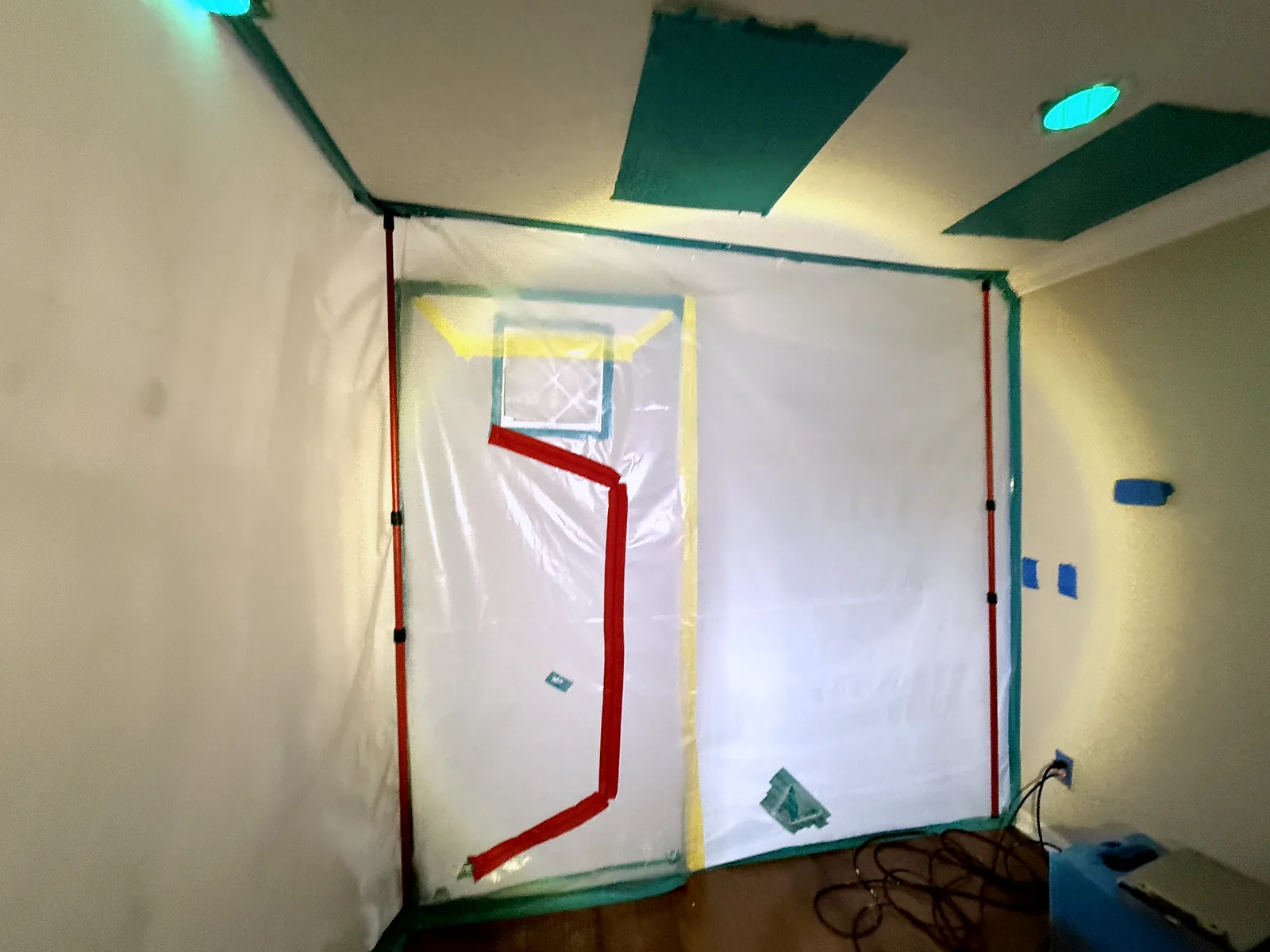
How do I know a remediation was actually successful?
When a remediation contractor has finished, post-remediation verification is the independent check that the work meets its clearance criteria, carried out before containment comes down. Because PureSpec never performs remediation, the verification is not being carried out by anyone with an interest in the result. The full scope is on the post-remediation verification page.
Specialty testing
Laboratory testing available when the situation calls for it.
Most inspections do not need any of these. They exist for the cases where the inspection, or a treating clinician, raises a question that air and surface sampling will not answer.
The mold-related panels come first, because they are what an Orlando property usually needs when it needs anything beyond standard sampling. ERMI and HERTSMI-2 analyze settled dust rather than air, which is why a physician sometimes asks for one. Mycotoxin testing looks for compounds some molds produce. Pathways maps how contamination has moved through a structure. Each measures the building, not a person: none of them diagnoses anything, and interpreting how a result relates to someone's health belongs to a licensed clinician.
Alongside those sit the chemical and biological panels for when the question is not mold at all: laboratory VOC analysis, dedicated formaldehyde testing, and endotoxin and allergen analysis. The testing hub explains which test answers which question.
Environmental data describes the building. Interpreting how any of it relates to a person's health is the role of a licensed healthcare provider, not an environmental assessor.
Orlando building stock
Four building eras, four different moisture problems.
Orlando has the widest range of housing stock in Central Florida, and the era a house was built in predicts how moisture behaves in it more reliably than anything else on the property.
Pre-war bungalows. Colonialtown, Delaney Park and the Lake Eola Heights area still hold houses built before slab-on-grade became standard. Many sit on pier foundations over a ventilated crawl space, which means the underside of the floor is exposed to outdoor humidity year round. Wood floors cup, baseboards stay damp at the bottom edge, and the moisture arrives from below rather than from a leak overhead.
Post-war concrete block. Conway, Azalea Park and the Pine Hills corridor are dominated by 1950s to 1970s block ranch houses. Block holds moisture against furring strips and drywall, so a stucco crack or a failed window flashing detail can wet the inside face of an exterior wall with nothing visible outside. These are the houses where a thermal camera earns its place, because the temperature difference shows up long before a stain does.
Tract-era slab. Avalon Park, Hunter's Creek, MetroWest and the 1980s to 2000s belt almost universally put the air handler in the attic. How moisture behaves in a Florida slab covers what that foundation type does and does not explain. An attic air handler concentrates several moisture risks in one place: a condensate line that backs up, a secondary drain pan that has been overflowing quietly, or a supply plenum sweating into the insulation above a ceiling nobody has looked at. Whether any of those conditions is present in a given property is a question for the inspection, not an assumption.
New construction. Lake Nona, Baldwin Park and the newest infill are built far tighter than the houses around them. A tight envelope is only an advantage while the ventilation and the dehumidification work as designed. When they do not, the same envelope that keeps conditioned air in also keeps moisture in, and indoor humidity climbs without a single drop of liquid water entering the building.
None of this replaces reading the actual building. It is why the inspection starts with the structure, the HVAC and where water has physically travelled, and why sampling follows the findings rather than leading them.
How an Orlando inspection actually works
Twelve steps. Same scientific process, every Orlando property.
The depth of each step adapts to your situation. Tracer smoke testing and borescope inspection happen when conditions warrant. Sampling is decided based on what your specific environment is asking, not a fixed checklist.
01Consultation
We talk through what you’re seeing, the building, and the question you need answered. Free, no pressure, no upsell.
02Humidity and dew point
Temperature, relative humidity and dew point are recorded room by room, with an outdoor reference, because a surface colder than the dew point collects water without any leak.
03Indoor air quality screening
Real-time particle counts across size channels, with on-site carbon dioxide, VOC and formaldehyde screening, room by room. Screening, not laboratory analysis.
04Comprehensive HVAC evaluation
Each air handler is opened and checked: blower compartment, coil, drain pan, supply and return plenums, filter, and the attic duct runs it feeds. A frequent hidden source of indoor mold in Florida buildings.
05Tracer smoke testing when needed
Smoke makes local air movement visible at the HVAC system and around penetrations and openings; temperature, humidity and surface-temperature readings help evaluate whether condensation is possible.
06Mold visual inspection
Daniel personally walks every accessible space in the Orlando property. No subcontractors.
07Thermal imaging
Infrared imaging surfaces temperature differentials that often correlate with hidden moisture or insulation gaps.
08Moisture mapping
Pin and pinless moisture meters identify elevated wall, floor, and substrate moisture invisible to the eye.
09Targeted sampling
Air, surface, swab, ERMI, HERTSMI-2, mycotoxin, Pathways™, VOC, or formaldehyde, only the tests your situation warrants.
10Lab analysis
Samples sent to AIHA-LAP-accredited third-party laboratories. Results returned within 24 to 72 hours of receipt.
11Written report
Plain-English report with photos, lab data, moisture readings, observations, and clear next steps. Organized so the client and relevant third parties can follow the observations, data, methods and basis for the assessment conclusions.
12Remediation protocol when warranted
If assessment findings support professional remediation, Daniel can write, as an optional add-on quoted separately, the IICRC S520-aligned remediation protocol, scope, containment, methods, and clearance criteria, that the remediation contractor works to. PureSpec does not remediate, so the protocol stays independent of the work crew.
Coverage
Every Orlando neighborhood, no travel surcharge inside Orange County.
Lake Eola Heights, Thornton Park, College Park, Baldwin Park, Audubon Park, Delaney Park, Downtown, Mills 50, SoDo, Conway, Belle Isle, Dr. Phillips, MetroWest, Orlo Vista, Hunter’s Creek, Lake Nona, Medical City, Avalon Park, Stoneybrook, Waterford Lakes, Lake Buena Vista, Bay Hill, and the rest of the metro inside the I-4 corridor. Mold detection in Orlo Vista and the surrounding unincorporated Orange County pockets west of downtown is covered the same way as the city limits, same scheduling, no travel surcharge. Orlando is PureSpec’s home metro, scheduling is fastest here.
Don’t see your neighborhood? Call (321) 324-7756, Daniel covers every part of the metro.
FAQ
Orlando questions, answered.
How quickly can you schedule a mold inspection in Orlando?
Most non-emergency Orlando inspections are booked within 48 hours, across Lake Eola, College Park, Baldwin Park, Lake Nona, Dr. Phillips, and the rest of the metro. Time-sensitive moisture and active water-loss cases are prioritized when scheduling allows, call (321) 324-7756 directly.
Are you available for ERMI or Pathways Testing in Orlando?
Yes. Daniel is a Certified Pathways Technician and routinely collects ERMI and HERTSMI-2 dust DNA samples to EPA-validated protocol for Orlando-area patients undergoing CIRS, MCAS, or chronic-illness workups with integrative-medicine providers. Reports include written interpretation, not just raw lab data.
Why hire an independent mold inspector instead of a remediation company?
PureSpec does not perform remediation, which means the inspection report cannot be biased toward justifying additional work. We provide the documentation; you choose the remediator.
Do you handle landlord-tenant mold inspections in Orlando rentals?
Yes. The Orlando theme-park-region transient labor market and student-rental concentration around UCF and Rollins generate steady tenant-side and landlord-side demand. PureSpec documents the environmental conditions found and reports them, so the tenant, the landlord, a code office, or an attorney has an independent factual record, see /services/tenant-friendly-mold-inspection/.
Do you offer indoor air quality testing in Orlando?
Yes. An indoor air quality investigation looks beyond mold at the building and the conditions it operates in, and can include parameters such as temperature, relative humidity, dew point, carbon dioxide and airborne particulate, with laboratory testing where the situation warrants it. On-site instrument readings are screening rather than compound-specific laboratory identification, and which parameters apply depends on the complaint and the building.
Can a newly built Orlando home be tested for VOCs or formaldehyde?
Yes. Construction and renovation materials such as composite wood products, cabinetry, flooring, adhesives and coatings can emit volatile organic compounds, and some products can contribute formaldehyde. A property being new does not establish that anything is elevated in it. Concentrations vary with the products used, time since installation, ventilation, how the air conditioning is run, temperature and humidity, so the only way to know is to measure.
Do I still need testing if I can already see suspected growth?
Often not for identification. If material is visible, the more useful questions are usually how far it extends, what is keeping the area wet, and whether it has spread beyond what you can see. Sampling is used where it answers something the inspection cannot, and visible growth-like material is described as microbial-like growth unless laboratory analysis confirms otherwise.
Available services