
Air Handler & Ductwork
AC mold inspection and testing in Orlando
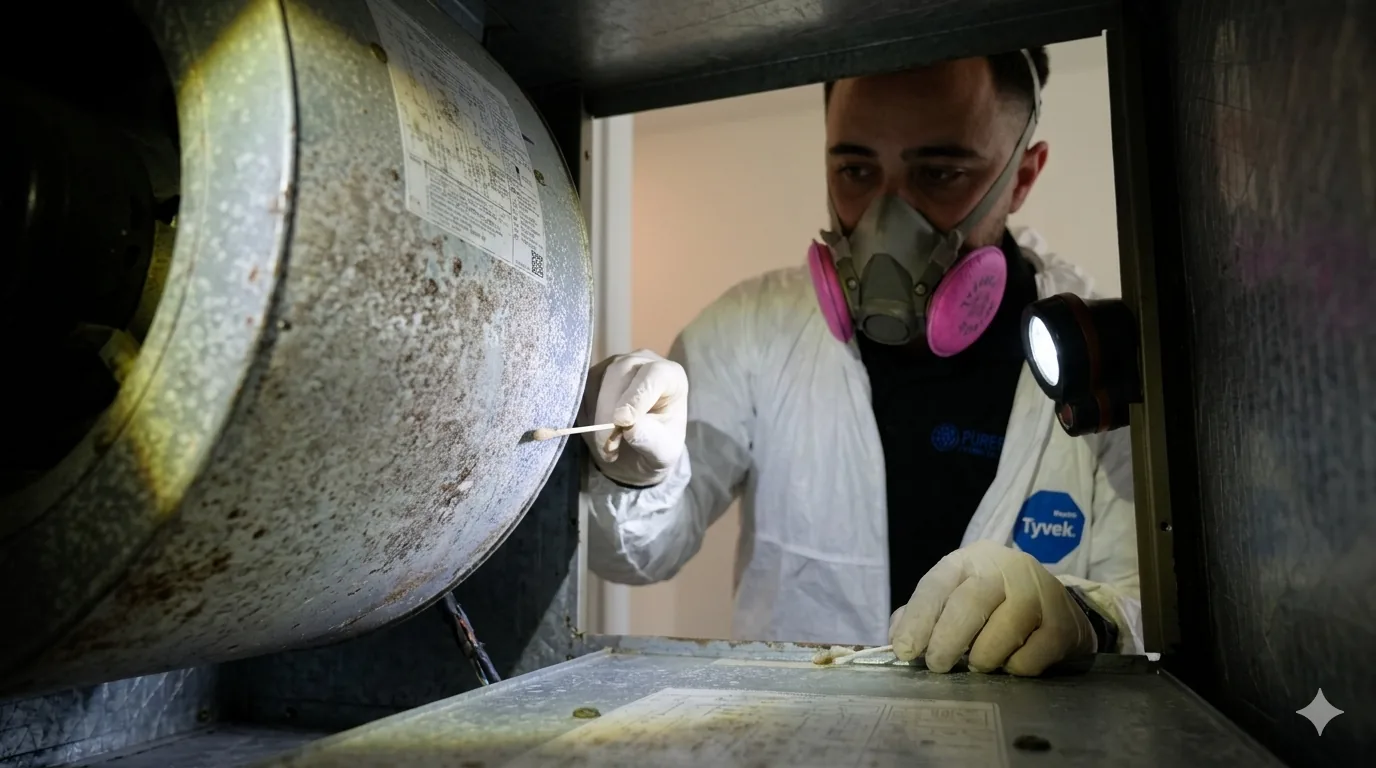
If your AC smells musty, you see suspected mold inside the unit, or spots keep returning around the vents, the system deserves a closer look. PureSpec's HVAC Health Check examines accessible air-conditioning components for moisture and suspected mold, with one laboratory sample included. Daniel performs the inspection personally and explains the findings in a written report.
1 Laboratory Sample Included Typically a surface swab from the air handler
Standard coverage includes Orange, Seminole, Lake, Osceola and Polk counties. For properties outside these counties, contact PureSpec for a written quote before booking. Any travel charge is disclosed in your written quote.
What does an AC mold inspection include?
An AC mold inspection checks accessible parts of your air conditioner for suspected mold growth and moisture problems. PureSpec's HVAC Health Check covers the air handler, cooling coil, drain pan and drain line, blower, supply plenum and accessible ductwork. The plenum is the box that carries air from the unit into the ducts. A musty smell or dark patch tells us where to investigate, but does not identify mold by itself. One surface sample from the coil, pan or another selected location is included and sent to an accredited laboratory. Daniel reads the laboratory results alongside what he observed in the system, then provides a written report. PureSpec inspects and tests only. A separate HVAC contractor handles cleaning, repairs or replacement. If the concern extends into rooms or building materials, we discuss whether a broader mold inspection fits the question.
What it covers
What does the AC inspection cover?
- Air handler cabinetInspected for mold growth and the condensation conditions that feed it.
- Blower compartment, coil and blower wheel
- Filter
- Unsealed openings that let unfiltered air bypass the filter
- Supply and return plenumsBoth sides of the air handler are checked.
- Supply plenum: outside, and inside with a borescope where an existing access opening allows
- Return plenum and its insulation: buildup and growth
- Condensate drain and panThe drain line and pan, where standing water and biofilm start, are checked for backup and growth.
- Return-side ductworkVisual and moisture check of the return, the side that pulls unconditioned, often humid air into the system.
- Supply ductwork and registersVisual inspection with targeted sampling where growth is visible or suspected, including condensation at registers on the room side.
- Attic duct runsChecked for condensation, damage and growth.
- Duct connections and vent boots
- Duct insulation, and the insulation below it for wetting
- Attic ventilation and insulation around the system, where they affect condensation
- Tracer smoke testingSmoke makes local air movement visible at the cabinet, plenums and duct joints; temperature, humidity and surface-temperature readings help evaluate whether condensation is possible where cooled air meets hot, humid air.
- Humidity and dew point readingsTemperature, relative humidity and dew point are recorded at the system and in the living space, to judge whether surfaces are running below the dew point.
- Negative-pressure verificationWhere applicable, confirms the system is not drawing contaminated air from attics, wall cavities, or crawlspaces.
- Included surface sampleOne coil, plenum, or register surface swab is included and sent to an accredited laboratory.
Optional lab testing
Testing you can add.
One laboratory sample, typically a coil or plenum surface swab, is included. When you need more than a single swab, any of these specialty panels can be added, and the cost is quoted up front:
- ERMI & HERTSMI-2 dust panelsDNA-based mold analysis scored against water-damaged-building markers, frequently requested for CIRS and MCAS medical documentation.
- Mycotoxin testingDetects the toxins some molds produce, a different question than how many spores are present.
- Pathways™ testingMicrofiber-swab sampling analyzed for peptide-bond protein, collected to manufacturer protocol.
- VOC & formaldehyde testingChemical off-gassing measurements for indoor-air-quality concerns beyond mold.
- Endotoxin testingBacterial-marker analysis for water-damaged or agricultural environments.
- Legionella water testingSampling of building water systems, cooling towers, potable water, spas, and fountains, for the bacteria that causes Legionnaires’ disease.
Add-on panels: ERMI, HERTSMI-2, mycotoxin, Pathways™, VOC, formaldehyde, endotoxin, and Legionella water testing. Every sample ships under chain of custody to an accredited third-party laboratory.
When you need it
When should you have your AC checked for mold?
- Musty smell only when HVAC runs
- Visible black or green growth on supply registers
- Tenant or occupant complaints throughout the building
- Post-HVAC service when unsure if the system is contaminated
- Pre-purchase verification on systems older than 10 years
How this service works
Where do we look for mold inside the AC?
In Florida the system cools air below its dew point on purpose, so the coil is wet, dark and fed with dust for most of the year. The inspection follows that logic.
01Air handler interior
Opened and assessed directly, not judged from the return grille.
02Evaporator coil
The surface that is deliberately kept below dew point, and the most common place growth is found.
03Condensate pan and drain line
Where the water the coil removes is supposed to go, and where it goes instead when the line backs up.
04Blower wheel and supply plenum
Downstream of the coil, and therefore downstream of anything growing on it.
05Accessible ductwork
Runs that can be reached and inspected, including boots and connections.
06Air leakage, made visible
Tracer smoke at the cabinet, plenums and duct joints shows where conditioned air escapes and condensation begins.
07Humidity and dew point
Readings at the system and in the living space, because a surface below the dew point collects water without any leak.
08Sampling where conditions warrant
Surface or air sampling is collected where the assessment calls for it, then analyzed by an accredited laboratory.
Service areas
Where we perform HVAC Mold Inspection.
Orlando and Central Florida as the primary market, with statewide Florida projects available based on scope, scheduling, and travel requirements. Click the county nearest you for local context.
Honest answers
HVAC mold inspection, answered.
Why is the air conditioner a place to look for mold in Florida?
Because it deliberately cools air below its dew point so water condenses on the coil. That is how it dehumidifies the house, and it also leaves the coil wet whenever the system is cooling, with dust carried across it by the air the system moves.
What gets inspected?
The air handler interior, the evaporator coil, the condensate pan and drain line, the blower wheel, the supply plenum, and accessible ductwork, along with confirmation that the condensate line is actually draining.
Do you service or repair the system?
No. PureSpec documents what is there and refers mechanical work to a licensed HVAC contractor. We do not clean ducts, replace components, or diagnose whether the system is correctly sized or charged.
Central Florida coverage