
Storm & Flood Response
Flooded or storm-damaged? What to do in the first 72 hours.
After a hurricane, flood, or major water intrusion, mold can begin growing in 24 to 48 hours. Here is what to do first, and how an independent mold assessment documents moisture-related and environmental conditions after the loss. Serving Orlando and Central Florida, performed personally by a microbiologist.
Standard coverage includes Orange, Seminole, Lake, Osceola and Polk counties. For properties outside these counties, contact PureSpec for a written quote before booking. Any travel charge is disclosed in your written quote.
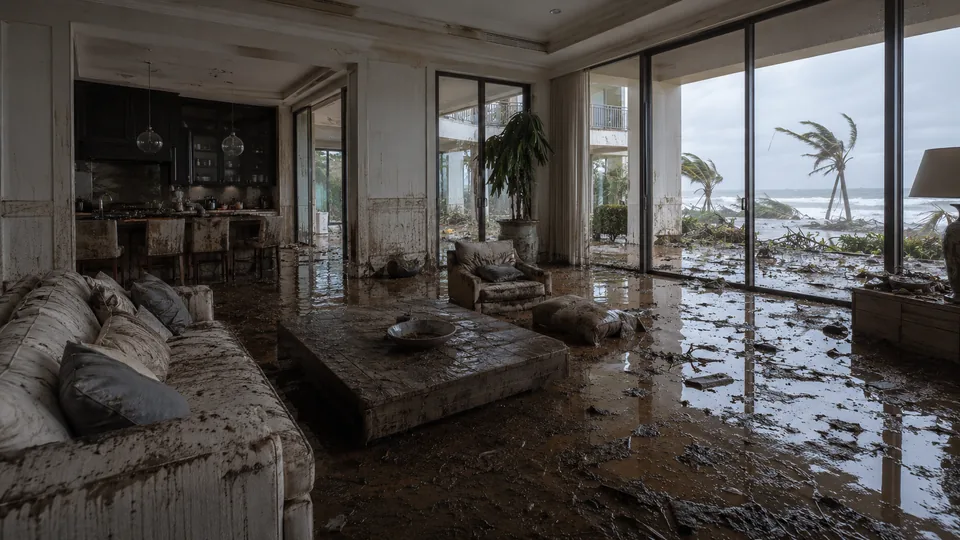
What should I do about mold after a flood or storm?
After a flood or storm, mold can begin colonizing wet materials within 24 to 72 hours, which is why prompt drying and moisture control are important. Remove standing water where it is safe to do so and start drying promptly with dehumidification, without blowing fans across visible growth, photograph everything before you throw it out, and document the damage while it is still in front of you rather than reconstructing it later. Category also degrades with time: water that started clean does not stay clean sitting in a warm wall cavity for several days. While materials are still wet, an independent assessment can map how far moisture has spread; after drying, it documents remaining moisture and any growth, with accredited-laboratory results. Air samples taken during active drying are harder to interpret, so laboratory sampling is usually timed for after drying. PureSpec assesses and documents, and does not perform remediation. The written report can be shared with an insurer or adjuster as environmental documentation.
The first 72 hours
Do these six things right away.
Mold does not wait for the water to recede. Wet drywall, carpet, pad, and cabinetry can support growth within a day or two. The faster wet materials are addressed and conditions are documented, the more complete the contemporaneous property record.
- Stay safe first. Cut power to flooded areas, and treat flood water as contaminated. If the water came from outside or from sewage, wear gloves and a mask.
- Stop the water and start drying now. Extract standing water and run dehumidifiers. Keep the AC running only if it did not take on floodwater, avoid blowing fans across visible growth, and have a restoration professional open wet wall and cabinet cavities so they can dry.
- Photograph everything before you discard it. Wide shots and close-ups of every wet material and water line. These photographs create a contemporaneous record of the observed property conditions.
- Pull soaked porous materials that cannot dry fast. Wet carpet, pad, and the bottom of drywall trap moisture. Removing them early stops mold from taking hold.
- Do not seal it up wet. Closing a wall or laying new flooring over damp material traps moisture and grows mold behind the finish. Verify it is dry first.
- Get an independent mold assessment. A microbiologist-led assessment documents remaining moisture and any growth and provides accredited-laboratory results as part of the environmental record, when sampling is warranted.
Why independent, after a storm
Independent environmental documentation after storm damage.
PureSpec is assessment-only and has no financial interest in performing remediation. Our role is to document the environmental condition through inspection observations, moisture data, photographs, and laboratory testing when warranted. Clients may share the report with an insurer, adjuster, contractor, or other relevant third party at their discretion.
When to call
When is a storm assessment the right fit?
- Standing water or flooding from a hurricane, tropical storm, or heavy rain
- Roof, window, or wall intrusion during a storm
- A musty smell or visible growth days or weeks after the water dried
- A post-loss property evaluation where independent environmental documentation is needed.
- A home you are buying or selling that had prior storm or flood damage
How it works
Fast, documented, and focused on the building.
Call → priority scheduling for active water situations → on-site moisture mapping, thermal imaging, and targeted sampling → accredited-lab analysis → a plain-English report with photos and lab data, organized so relevant third parties can follow the observations, methods, data and basis for the findings.
How an inspection actually works
Twelve steps. Same scientific process, every property.
The depth of each step adapts to your situation. Tracer smoke testing and borescope inspection happen when conditions warrant. Sampling is decided based on what your specific environment is asking, not a fixed checklist.
- 01
Consultation
We talk through what you’re seeing, the building, and the question you need answered. Free, no pressure, no upsell.
- 02
Humidity and dew point
Temperature, relative humidity and dew point are recorded room by room, with an outdoor reference, because a surface colder than the dew point collects water without any leak.
- 03
Indoor air quality screening
Real-time particle counts across size channels, with on-site carbon dioxide, VOC and formaldehyde screening, room by room. Screening, not laboratory analysis.
- 04
Comprehensive HVAC evaluation
Each air handler is opened and checked: blower compartment, coil, drain pan, supply and return plenums, filter, and the attic duct runs it feeds. A frequent hidden source of indoor mold in Florida buildings.
- 05
Tracer smoke testing when needed
Smoke makes local air movement visible at the HVAC system and around penetrations and openings; temperature, humidity and surface-temperature readings help evaluate whether condensation is possible.
- 06
Mold visual inspection
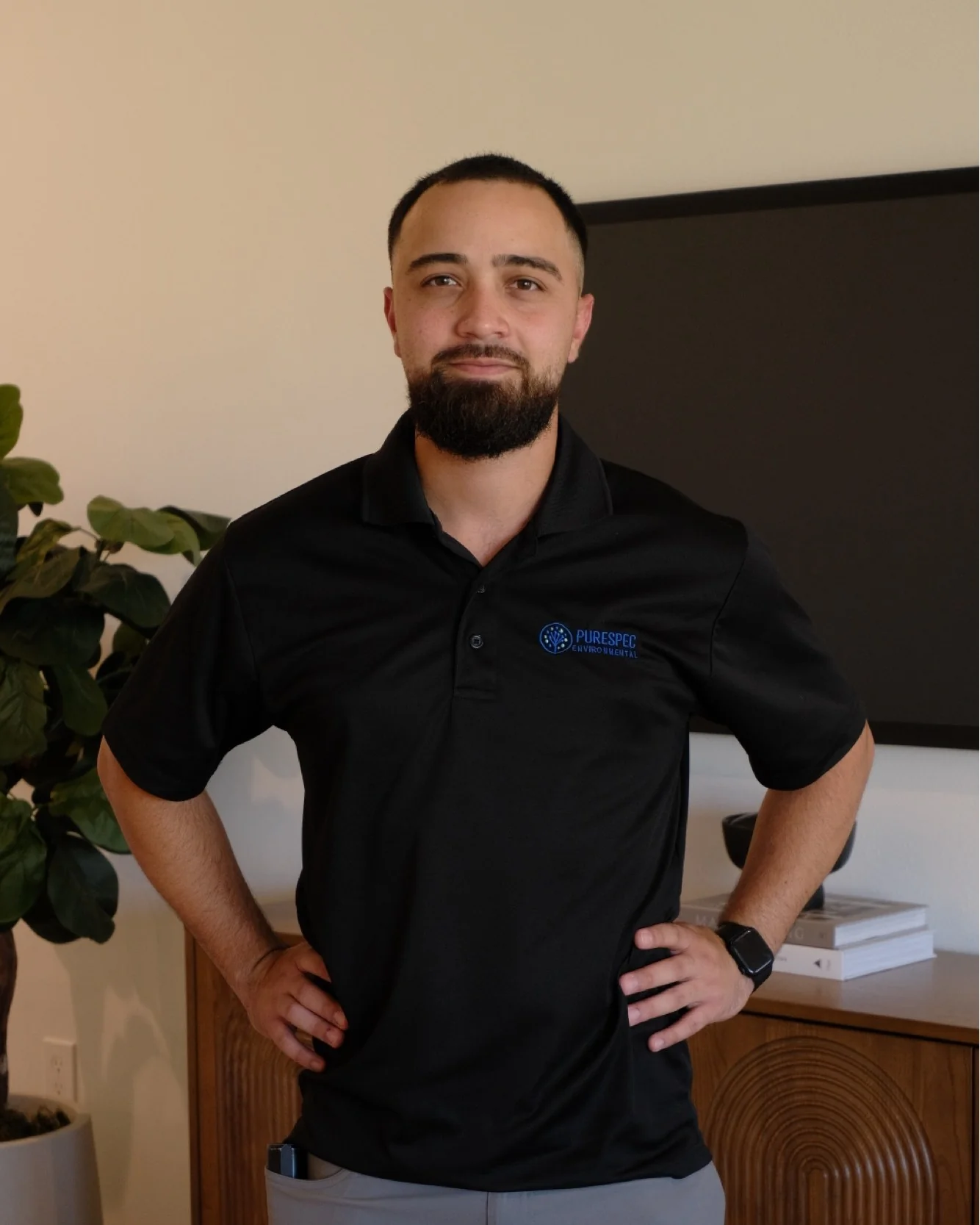
Daniel personally walks every accessible space. No subcontractors.
- 07
Thermal imaging
Infrared imaging surfaces temperature differentials that often correlate with hidden moisture or insulation gaps.
- 08
Moisture mapping
Pin and pinless moisture meters identify elevated wall, floor, and substrate moisture invisible to the eye.
- 09
Targeted sampling
Air, surface, swab, ERMI, HERTSMI-2, mycotoxin, Pathways™, VOC, or formaldehyde, only the tests your situation warrants.
- 10
Lab analysis
Samples sent to AIHA-LAP-accredited third-party laboratories. Results returned within 24 to 72 hours of receipt.
- 11
Written report
Plain-English report with photos, lab data, moisture readings, observations, and clear next steps. Organized so the client and relevant third parties can follow the observations, data, methods and basis for the assessment conclusions.
- 12
Remediation protocol when warranted
If assessment findings support professional remediation, Daniel can write, as an optional add-on quoted separately, the IICRC S520-aligned remediation protocol, scope, containment, methods, and clearance criteria, that the remediation contractor works to. PureSpec does not remediate, so the protocol stays independent of the work crew.
Honest answers
Storm and flood mold assessment, answered.
How soon does mold start after flooding?
Colonization can begin on wet materials within 24 to 72 hours, so the first three days matter more than anything that follows. Remove standing water and start drying immediately, and photograph everything before it goes out.
Should I test while the building is still wet?
Air sampling usually waits, because samples taken during active drying are harder to interpret. An assessment while materials are still wet is still useful: it maps where moisture has spread and documents conditions. Laboratory testing is most useful once drying is complete, or where there is reason to think moisture stayed trapped somewhere the equipment never reached.
Does water damage get worse the longer it sits?
Yes, and not only in volume. Water that started clean does not stay clean sitting in a warm wall cavity for several days, which changes how the affected materials have to be handled.
Service areas
Serving Orlando and all 67 Florida counties.
Based in Winter Garden in the Orlando metro, PureSpec covers all of Central Florida at standard rates and the rest of the state by custom quote. See the full service area.