
Lake County · Central Florida
Mold Inspection in Clermont, Florida
Independent mold assessment and testing across Clermont and south Lake County, performed by Daniel Melendez, a microbiologist and Florida-licensed mold assessor. Lab-supported, and assessment-only: PureSpec never performs remediation.
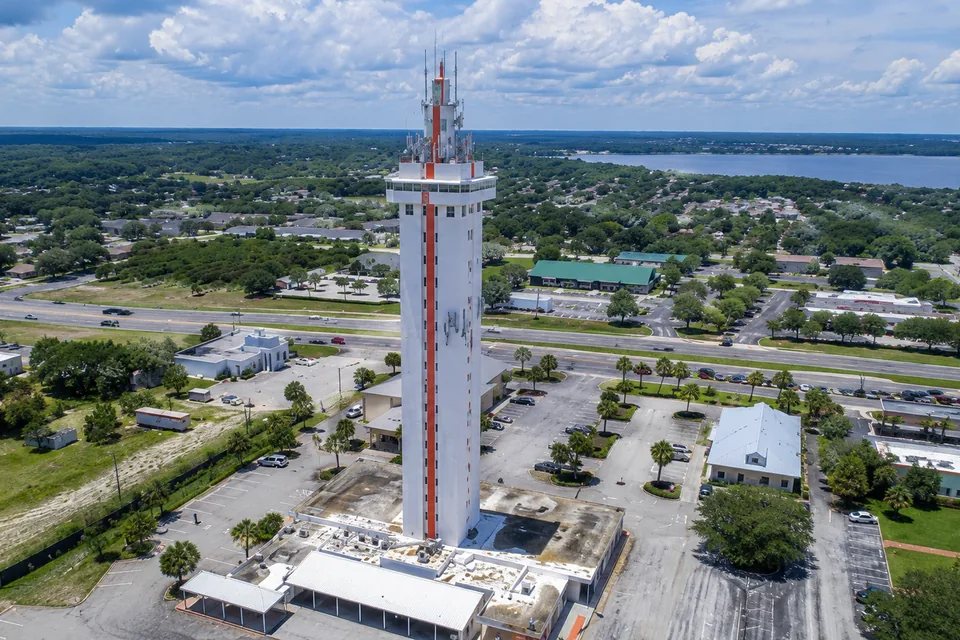
What is mold inspection in Clermont?
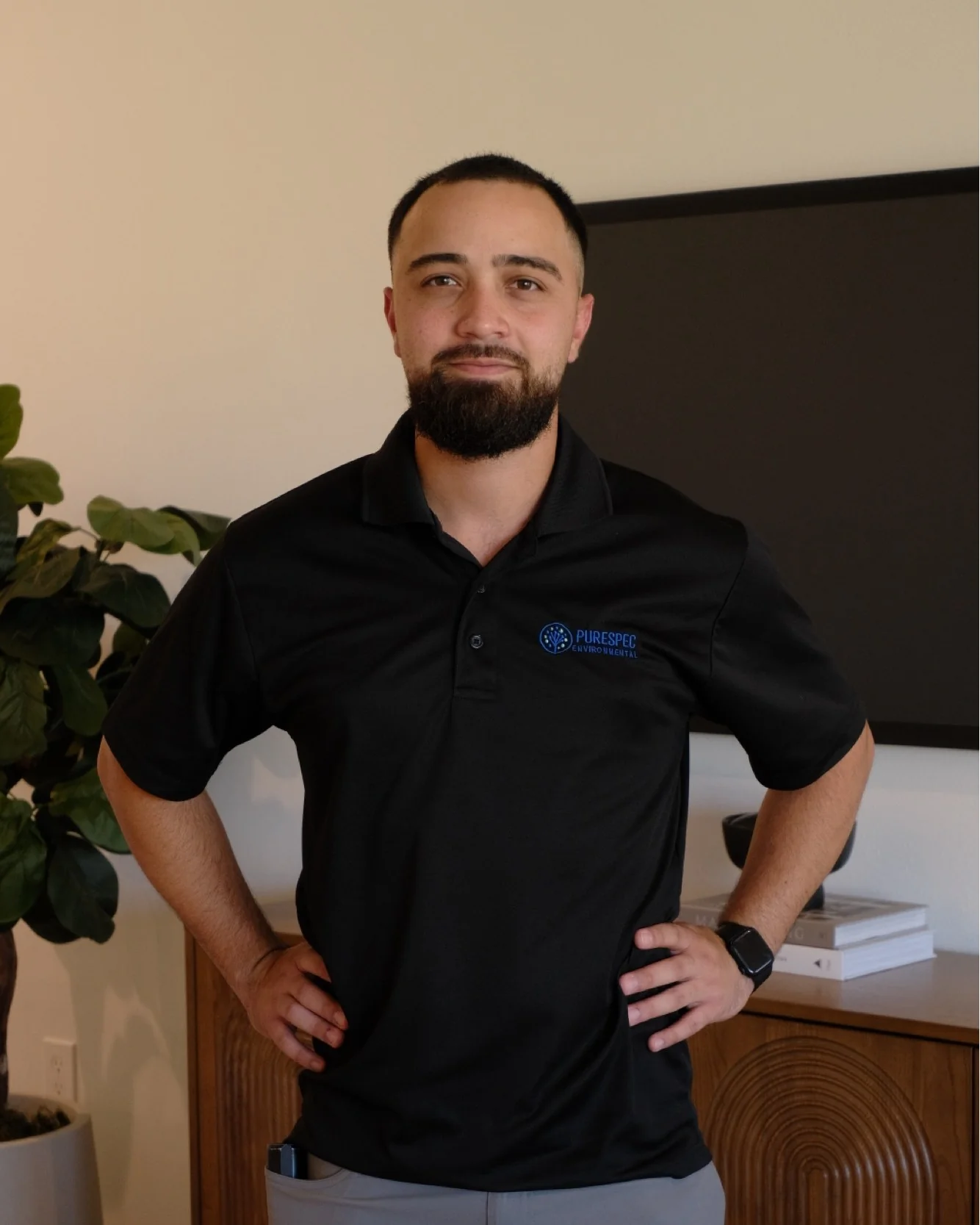
A mold inspection in Clermont is the structured assessment of a home or commercial property to identify mold growth, moisture sources, and indoor air quality conditions. The process combines a visual walk-through of every accessible space, moisture-meter readings on each suspect surface, thermal imaging that flags surface-temperature patterns worth confirming with a moisture meter, an evaluation of the air conditioning system, and attic access where it is safe. Three accredited-laboratory samples are included and collected where the findings call for them rather than to a fixed formula. Everything is documented in a written report with photographs, instrument data, and laboratory results. Every inspection is performed personally by Daniel Melendez, a microbiologist and Florida-licensed mold assessor. PureSpec performs environmental assessment and testing only. It never performs remediation. What the assessment concentrates on changes with the property: its age, how it has been occupied, and what its water history is.

What an inspection covers
What does a mold inspection in Clermont actually evaluate?
The building, not just the air in it. An air sample describes what was floating past a pump for a few minutes. It cannot tell you where water is getting in, how long it has been there, or what is behind a wall you have not opened.
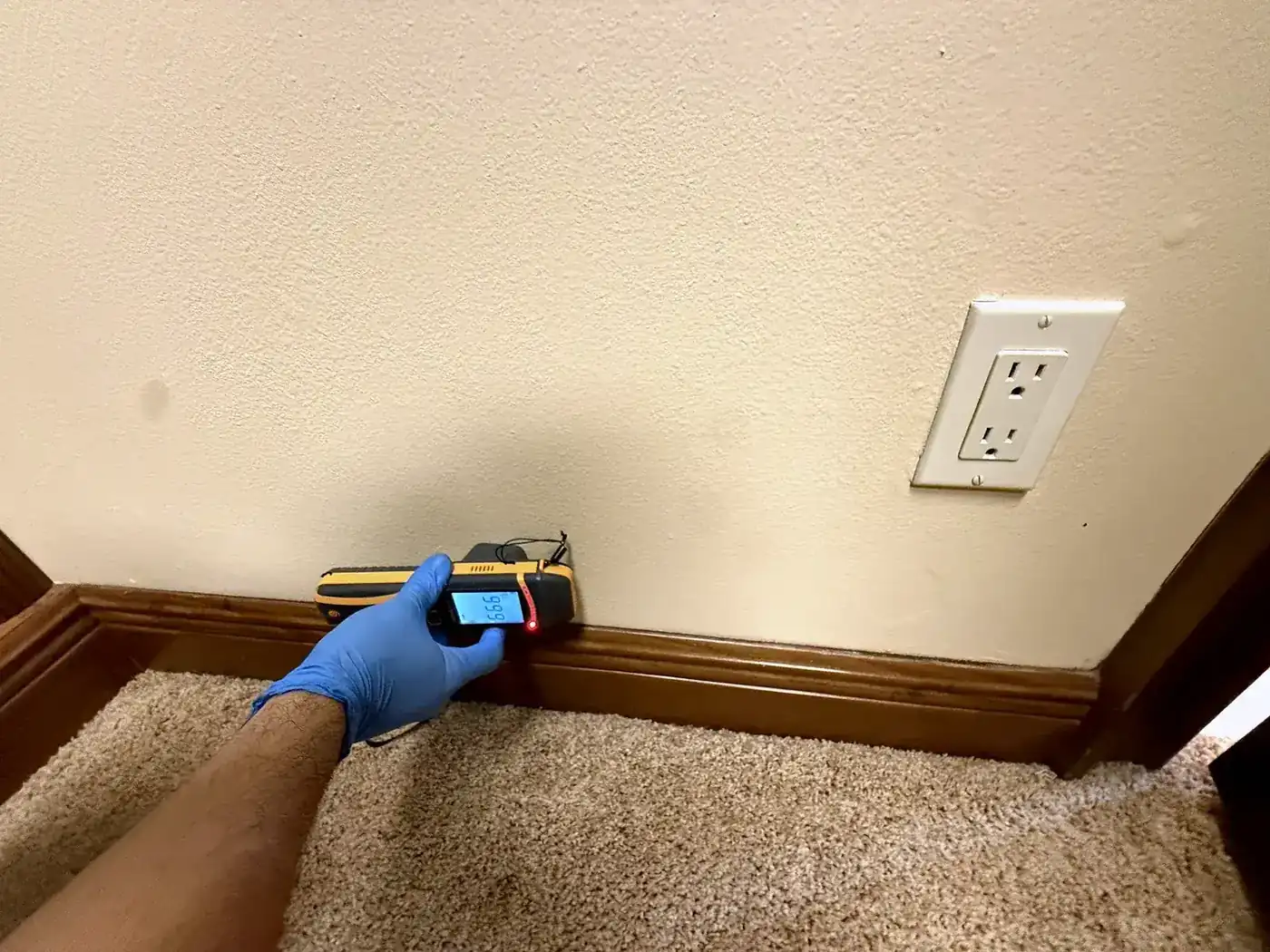
What gets evaluated depends on the scope you booked, what is safely accessible, and what the walk-through finds. No two assessments cover exactly the same ground, and none of them covers everything. Depending on the property, the assessment may take in the water history of the building, moisture readings across walls, floors and substrates, thermal anomalies worth metering next, visible or suspected microbial growth, accessible parts of the air conditioning system, attic and substructure conditions where those spaces exist and can be entered safely, insulation and air-barrier condition, and evidence of previous leaks or intrusion.
Thermal imaging is worth being precise about, because it is routinely oversold. An infrared camera measures surface temperature. It does not detect moisture and it does not detect mold. It shows where a surface is cooler or warmer than its surroundings, which tells an inspector where to put a meter next. That is genuinely useful and it is not the same as seeing through a wall. The limits are worth understanding before reading anyone's thermal report.
Where a condition is concealed and the field evidence supports looking, a borescope through a small access point can answer the question without opening the assembly. Where it does not, the report says what was reached and what was not, so the boundary of the assessment is on the record alongside the findings.
The full methodology, step by step, lives on the entire-property inspection page.
The part most inspections skip
Why do HVAC and attic conditions matter during a Clermont mold inspection?
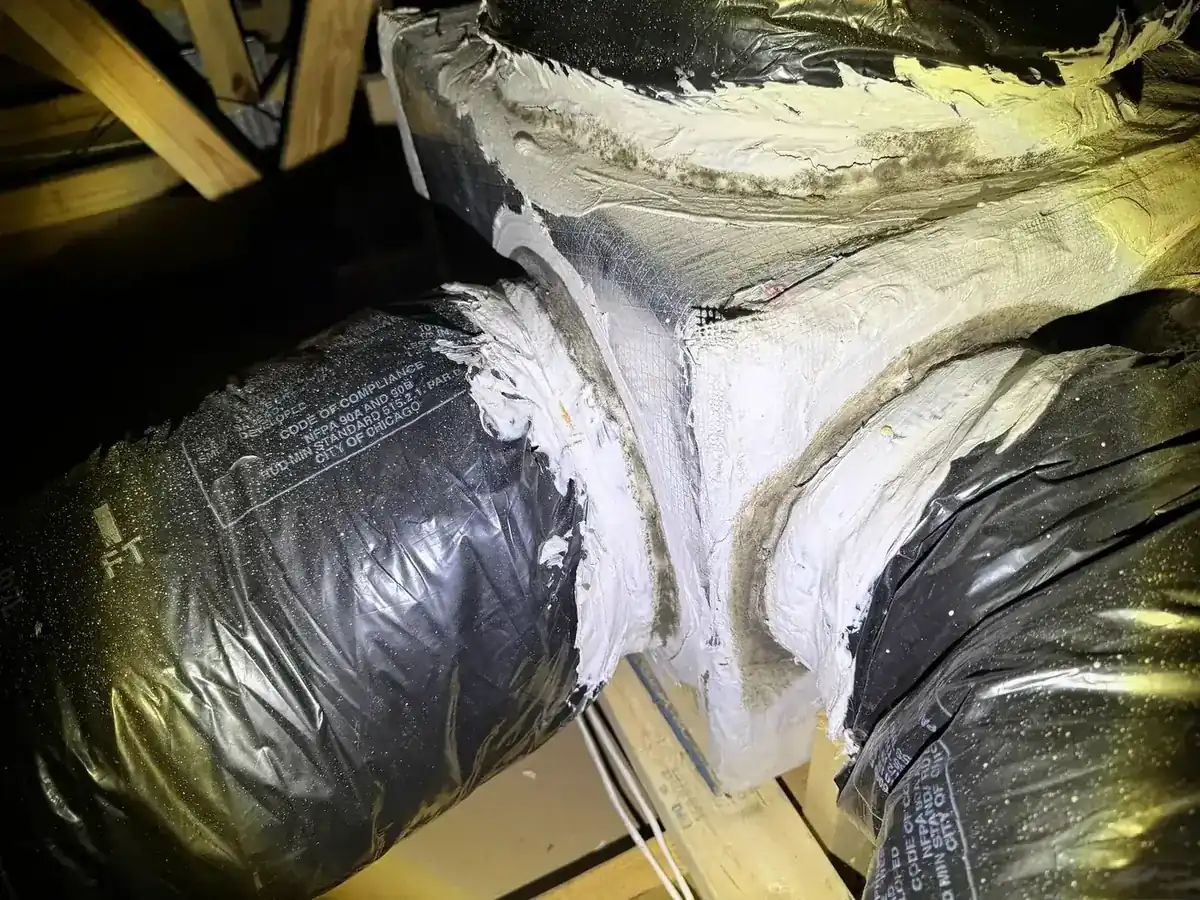
Because in a Florida house the air conditioning system moves air through spaces nobody looks at, and a great deal of what an assessment can find is found above the ceiling rather than in the room.
Where the air handler sits in the attic, which is common in newer Clermont construction, everything the coil produces has to be caught and carried out: the primary drain pan, the trap, the condensate line, the secondary pan and the float switch. When part of that chain stops working the water lands on the ceiling below rather than somewhere anyone would notice.
Condensation is the other mechanism, and it needs stating carefully. Condensation forms when a surface falls below the dew point of the air touching it. In a hot, humid attic that can mean duct exteriors, boots at the ceiling plane, plenum seams and the connections at the air handler. Where those conditions are present, what grows in and around ductwork and contamination inside the system itself become part of the question rather than a separate one.
Air leakage between the attic and the conditioned space matters for the same reason. Gaps around penetrations, unsealed chases and incomplete transitions let humid air move where it was not intended to, and insulation that is missing, displaced, compressed or unevenly laid changes where surfaces sit relative to dew point. That is an installation question rather than a quantity question, and air leakage and wet insulation covers why the two travel together.
Accessible components are evaluated where the attic can be entered safely. Not every attic can, and the report says which. Where what is observed points at the equipment rather than the environment, that warrants evaluation by a qualified HVAC contractor: PureSpec assesses the environment and does not perform mechanical diagnostics. Where the concern is the system specifically, the HVAC health check is the scope built for it.
Local context
Different Clermont properties, different questions.
There is no single Clermont mold problem. What the assessment is actually trying to establish changes with how the building was made, how it has been used, and what happened to it before you got there.
Established homes
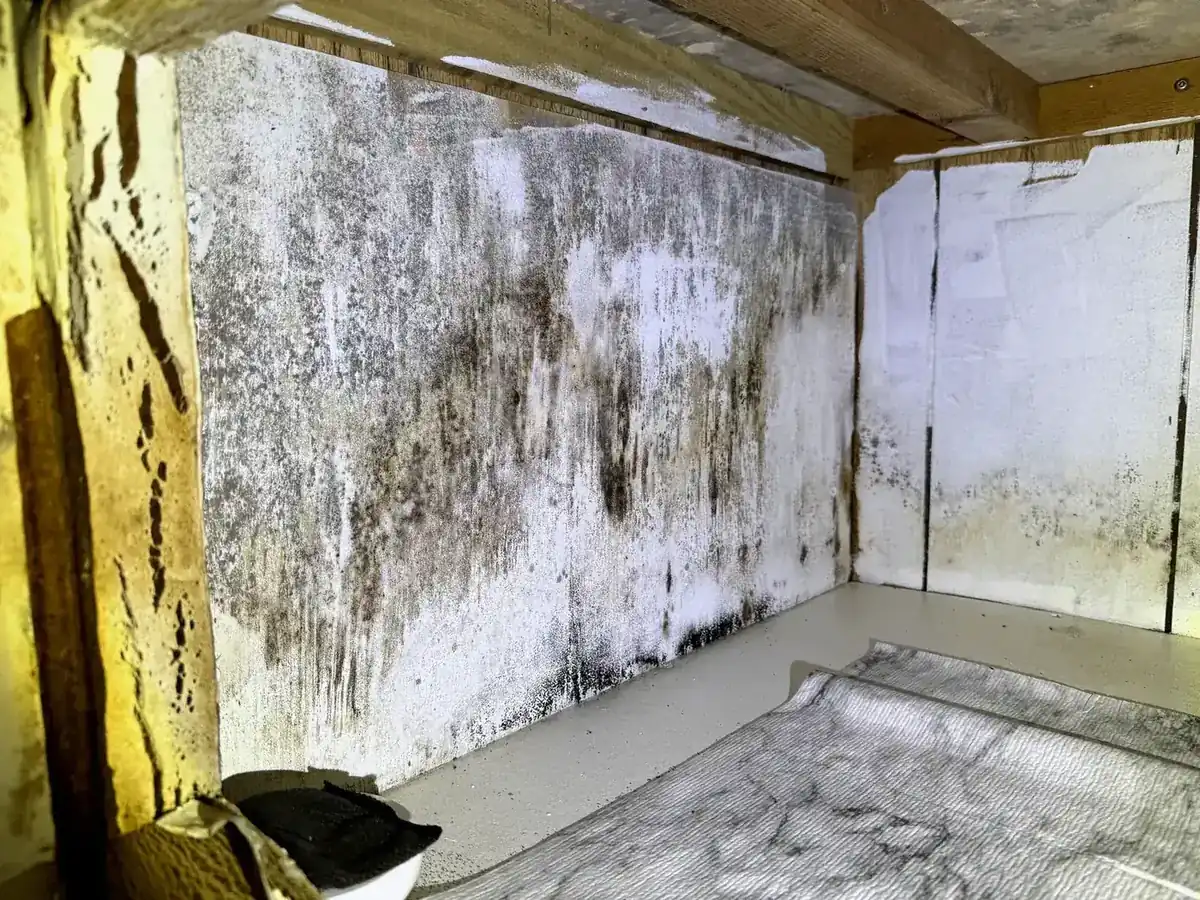
The questions here are usually historical. Has there been a plumbing leak, a roof event, a repair nobody documented, or a kitchen or bathroom updated over an assembly that was never opened. A new finish tells you nothing about what is behind it. Where the history or the field conditions suggest something concealed, what happens after a water event is the pattern being looked for, and a musty smell with no visible source is the most common way it presents.
Newer construction
Newer properties are not defective, and most have nothing wrong with them. What differs is where the questions concentrate: how the air conditioning was commissioned and whether it controls humidity as well as temperature, the condensate chain on an attic-mounted air handler, flashing details now hidden behind finished stucco, and whether materials that got wet during construction dried before they were enclosed. Where the concern is new materials rather than moisture, cabinetry, flooring, adhesives and finishes can emit VOCs and formaldehyde, and testing for those is a separate scope. New construction across south Lake County covers the pattern in depth.
Homes that sit empty for part of the year
Clermont has a substantial active-adult and part-time population, in gated communities such as Kings Ridge, Summit Greens and Heritage Hills as well as across the wider market. A house that is occupied for part of the year is not at risk because it is empty, and nothing here should be read that way. What changes is that the system may run on different settings for months, indoor humidity conditions can shift with how the building is operated, and a small leak has longer to go unnoticed before anyone is standing in the room. Why a cooled house is not automatically a dry one explains the mechanism. On a return visit or before a sale, occupancy history is part of what the assessment asks about.
Year-round homes with a specific concern
Most Clermont inspections are none of the above. Somebody has a smell, a stain, a reaction indoors, or a leak that has been repaired and they want to know what it left behind. That is a scoped question with a scoped answer, and it is what the limited-scope inspection exists for.
Before you close
Buying a home in Clermont?
A general home inspection and an environmental assessment answer different questions, and both are worth having. A home inspector evaluates the house as a set of systems and reports what is not working. A mold assessment asks a narrower question with different instruments: is there moisture where there should not be, is there growth, where did the water come from, and what does the laboratory say about the samples.
The situations where the second question is worth asking are fairly specific. The home inspection flagged staining. The disclosure mentions a past leak or a roof replaced after a storm. The house has been vacant and nobody can say how it was run. There has been a renovation, or a remediation, and no independent verification of either. Or somebody in the household simply reacts indoors and nobody can say why.
On a resale that usually means an entire-property inspection. On a house still being built, it means a pre-drywall visit before the assembly closes. How a mold contingency fits a Central Florida contract covers the timing, which matters more than most buyers expect.
Where we work in Clermont
From single-family homes to commercial buildings.
-

RESIDENTIAL Residential Mold Inspection
Single-family homes, townhouses, and condos across Clermont, full-property and limited-scope assessments by a state-licensed mold assessor.
-

COMMERCIAL Commercial Mold Assessment
Office, retail, healthcare, school, and hospitality buildings across the Clermont metro, reporting structured for property managers, insurers, and OSHA-aware contexts.
-

APARTMENT Apartment / Tenant Mold Inspection
Independent third-party documentation built for renters dealing with landlords and property managers across Clermont-area multifamily housing.
Which service you need
What each PureSpec service answers in Clermont.
Find the question closest to yours. Every service is performed personally by Daniel Melendez, a microbiologist and former environmental lab analyst, and every sample ships to an AIHA-LAP-accredited third-party laboratory under chain-of-custody.
“I think there’s mold somewhere in my house but I don’t know where.”
“I already know where the problem is, I just need it documented.”
“I can see something dark or fuzzy on a wall, can you tell me what it is?”
“How do I get the air in my house tested for mold?”
“Is it black mold? Can you test for Stachybotrys specifically?”
“I bought a DIY mold test kit at the hardware store. Can I trust the result?”
“My doctor mentioned ERMI or HERTSMI-2 testing, what is that?”
“I tested positive for mycotoxins in my body, where did they come from?”
“The air test was normal but I still feel sick at home.”
“We just moved in or renovated and something doesn’t feel right.”
“The remediation company says it’s clean. How do I know?”
“Could my air conditioner be making us sick?”
“I’m buying a house here and the disclosure mentions a leak.”
“Our house is still being built. Can anyone look before the drywall?”
“It’s an office, a clinic or a tenant space, not a house.”
Specialty testing is usually requested by clients already working with a practitioner who has asked for a specific result. The environmental data is the part PureSpec supplies; the interpretation belongs with the clinician who asked for it.
Mold testing
Does every Clermont mold inspection need air testing?
No. Sampling answers a specific question, so what gets collected depends on the assessment objective, what the walk-through and the instrument readings actually found, and what you need to establish. A practice that samples everything is not assessing anything.
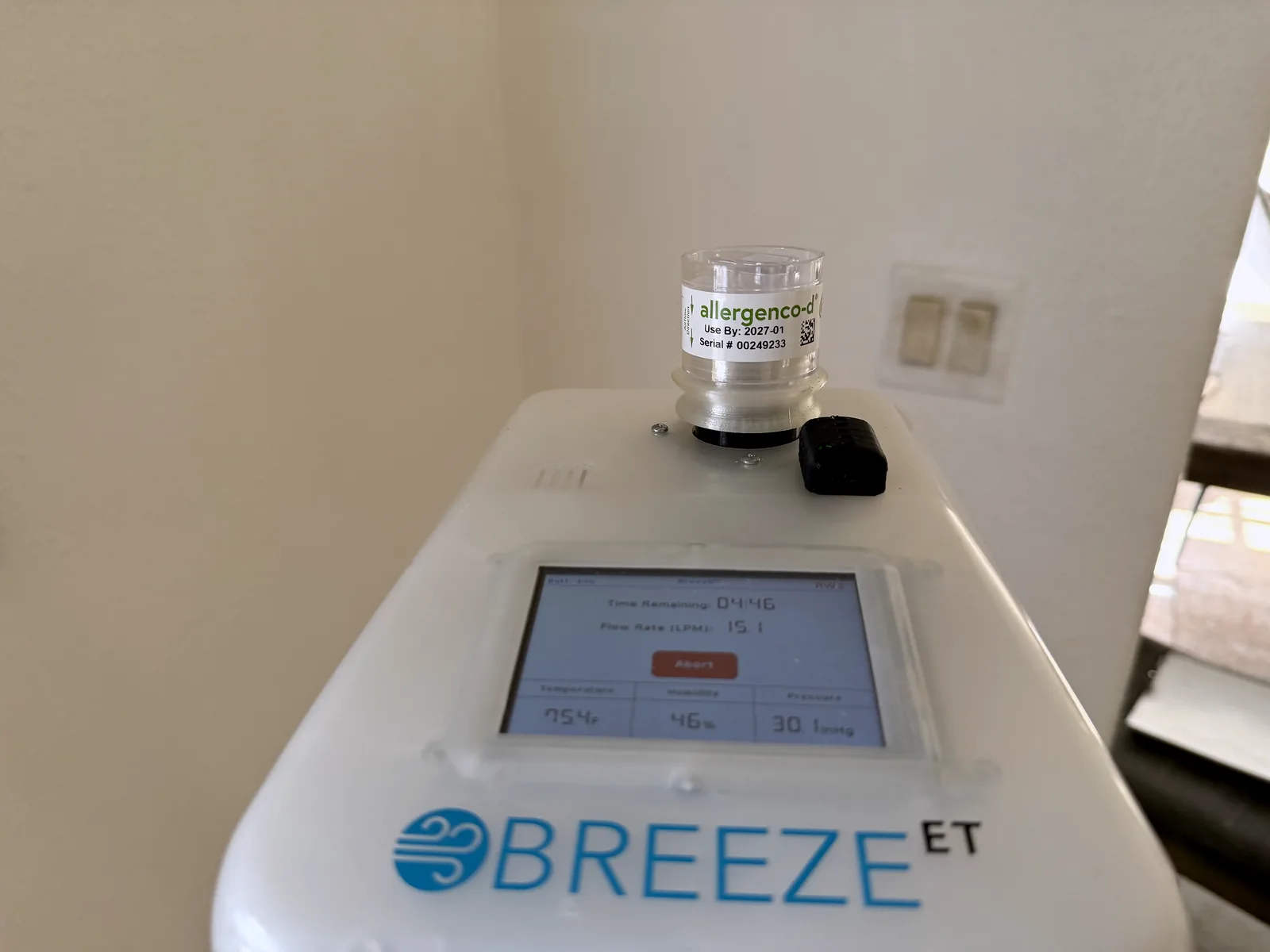
Air sampling reports what was airborne during the minutes the pump ran, read against a same-day outdoor reference. It is useful for some questions and poor at others. In particular, a normal air result does not rule out growth concealed inside an assembly, which is the most common misreading of a mold test.
Surface and tape-lift sampling identifies what is on a particular material. It is the right tool when the question is what a specific patch is, and the wrong one when the question is how far it extends. Targeted sampling covers anything chosen for a reason: a cavity, a duct interior, a specific room where the readings pointed.
Three accredited-laboratory samples are included with a complete inspection, placed where the findings point rather than to a fixed formula. What each method establishes, and where each one stops, is covered on the mold testing service page.
Scope
What a Clermont assessment covers.
-
Before the visit
History
What the building is, how it has been occupied, and what is known about past leaks, repairs, remediation or storm damage.
-
On site
Moisture, HVAC and accessible areas
Meter readings across walls, floors and substrates. Accessible air handler, plenum, duct and condensate conditions. Attic and substructure where they exist and can be entered safely.
-
Decided on site
Sampling, where it answers something
Three accredited-laboratory samples with a complete inspection, placed where the findings point. Mold testing
-
Afterward
Report, and what to do next
Photographs, instrument readings and laboratory results, with what was reached and what was not. Where remediation is warranted, an independent protocol the contractor works to.
Local geography
Does Clermont's terrain change the investigation?
Sometimes, and less dramatically than it is usually described. Clermont sits on higher and more varied ground than most of Central Florida, which means grade, site drainage and how water moves away from a foundation are worth looking at on a sloped lot in a way they are not on a flat one. That is a site question, answered with a meter and a look at the grade, rather than a reason to expect a problem. How Clermont's hills and lakes relate to home moisture covers the subject properly.
Coverage
Clermont and south Lake County.
Downtown and the Montrose Street area, the neighborhoods along the Clermont chain of lakes, the Hancock Road and US-27 corridors, and the gated communities south and west of the city. Properties outside the city limits with a Clermont mailing address are covered the same way.
Neighboring cities have their own pages: Minneola, Groveland, Montverde. For the wider county, see Lake County. Don’t see your area? Call (321) 324-7756.
FAQ
Clermont questions, answered.
What does a mold inspection in Clermont include?
A visual assessment of every accessible space, moisture-meter readings across walls, floors and substrates, thermal imaging used to find anomalies worth metering next, an evaluation of the accessible parts of the air conditioning system, and attic or substructure access where those spaces exist and can be entered safely. Three accredited-laboratory samples are included with a complete inspection, placed where the walk-through and the readings point rather than to a fixed formula. Everything lands in a written report with photographs, instrument readings and laboratory results, including what was reached and what was not.
Do I need air testing, or is the inspection enough?
It depends what you need to establish. Air sampling reports what was airborne while the pump ran, against a same-day outdoor reference, and it is genuinely useful for some questions. It is a poor tool for others: a normal air result does not rule out growth concealed inside a wall or an assembly. The assessment decides what sampling would actually answer, rather than selling a sample as the inspection. Sometimes the honest answer is that no sample is needed.
Do you inspect the attic and the air conditioning system?
Where they can be entered safely, yes, and it is often where the useful evidence is. In much of the newer Clermont housing stock the air handler sits in the attic, which puts the coil, the drain pan, the trap, the condensate line and the duct connections above finished ceilings. Not every attic is safely accessible, and the report states which areas were reached. Conditions that point at the equipment rather than the environment warrant evaluation by a qualified HVAC contractor.
Should I get a mold inspection before buying a Clermont home?
It depends what you already know. If the home inspection flagged staining, if the disclosure mentions a past leak or a roof replaced after a storm, if the house has been vacant and nobody can describe how it was run, or if there has been a renovation or a remediation with no independent verification, that is when a second and narrower opinion earns its place. On a resale that usually means an entire-property inspection; on a house still under construction it means a pre-drywall visit.
Do you inspect new construction before the drywall goes on?
Yes. Before drywall is the one point where framing, sheathing, duct runs and insulation can all be looked at directly rather than through an access hole. Materials get rained on during construction and that by itself is normal; what matters is how long they stayed wet and whether they dried before they were enclosed. A pre-drywall visit documents the condition of the assembly at that moment, which is also useful later if a question comes up after closing.
Can you do mycotoxin, ERMI or HERTSMI-2 testing in Clermont?
Yes, as separate scopes rather than as part of a standard assessment. Environmental mycotoxin testing samples dust, surfaces and air in the building rather than people. ERMI and HERTSMI-2 are dust-based indices, usually requested when a clinician has asked for one. None of them diagnoses anything: they measure the environment, and interpretation of any health question belongs with a licensed healthcare provider.
Nearby cities & towns
Available services