
Orange County · Central Florida
Mold Inspection in Windermere, Florida.
Independent, founder-performed assessment by Daniel Melendez, a microbiologist and former environmental laboratory analyst. Lab-supported, never combined with remediation, with most Windermere inspections scheduled within 48 hours.
What is a mold inspection in Windermere?
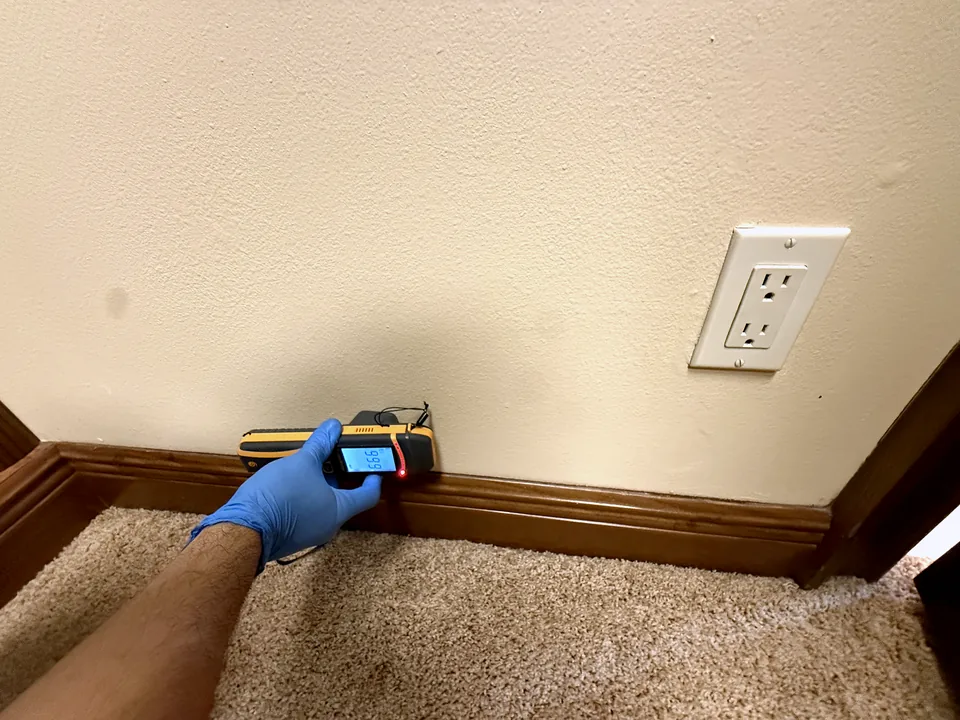
A mold inspection in Windermere is an independent assessment of a property's moisture conditions, carried out to answer a specific question rather than to sell a cleanup. It combines a visual assessment of accessible areas, moisture measurements on surfaces and materials, thermal imaging used as a screening tool, observations of the air conditioning system and accessible attic areas where present, and a review of the building's history and any evidence of past water intrusion. Three accredited-laboratory samples are included with a complete inspection, placed where the findings point. PureSpec performs environmental assessment and testing only and never performs remediation, so nothing in the findings has work attached to it. The report is an independent factual record of what was measured and observed, and what could not be reached. Where a property is larger or more complex, with more than one system or areas that differ from one another, the scope is set to the building rather than assuming one location represents all of it.
What does a mold inspection in Windermere include?
A mold inspection in Windermere is the structured assessment of a home or commercial property to identify mold growth, the moisture feeding it, and the indoor air conditions. It combines a visual walk-through of every accessible space, pin and pinless moisture-meter readings across walls, floors and substrates, thermal imaging that narrows where to meter next, an end-to-end evaluation of the air conditioning system, and attic access where it is safe to enter. Three accredited-laboratory samples are included, placed where the walk-through and the readings point rather than to a fixed formula. Everything lands in a written report with photographs, instrument readings and laboratory results. Every inspection is performed personally by Daniel Melendez, a microbiologist and Florida-licensed mold assessor, MRSA #4575. PureSpec performs environmental assessment and testing only. It never performs remediation. Windermere lakefront estates hide moisture in unused wings, multi-zone HVAC, and lakeside outbuildings.


Property complexity
Why does the size of a Windermere property change the assessment?
Not because a larger house is more likely to have mold. It is not. What changes is the assessment problem. A property may be more complex than a single-system house, and where that complexity exists, one location stops being a reasonable stand-in for the whole building.
Depending on the property, that can mean more than one air conditioning system or zone, separate wings held at different temperatures, more than one attic area, a larger roof with more penetrations, extensive glazed door and window assemblies, several bathrooms and plumbing runs, a pool and lanai, or structures that were added later. None of these is a problem in itself. Each is simply another part of the building that the assessment has to account for rather than assume.
The practical consequence is about scope, not about risk. Before the visit I want to know what the property actually contains, because that determines what gets reached and where measurements are taken. A property with four independent systems and a guest structure is not answered by the approach that answers a single-system house, and pricing scope to the building is more honest than discovering the gap afterward.
Guest houses, cabanas and other detached conditioned space
Where a property includes a guest house, pool house, cabana or detached conditioned garage, and where it is included in the agreed scope, it is treated as its own environmental area. It may have its own cooling equipment, its own occupancy pattern and its own history, so conditions inside the main house say little about it. Not every Windermere property has structures like these, and where they exist they are inspected because they are part of the property, not because detached buildings are suspect.
The deeper building-science argument behind this, including how idle zones and unused square footage behave, is set out in Windermere lakefront estates and the moisture risks smaller homes do not face.
What a sample answers
Can one air sample represent a large home?
An air sample reports the airborne spore concentration at one location, over the minutes it was running, compared against an outdoor reference taken the same day. That is a real and useful measurement, and PureSpec collects air samples on most complete inspections. It is worth being precise about what it does not do.
An air sample taken in a great room does not report on an attic, a wall or floor cavity, the interior of an air conditioning system, a different floor, a separate zone or a detached structure, unless those areas are separately evaluated by a method suited to them. That is true in a small house as well. It simply matters more in a property where areas are materially different from one another, because the further the sample location is from the question, the less the result has to say about it.
So the sampling strategy follows the question. If the concern is a specific room, the sample belongs in that room. If the concern is a system, a surface or cavity method may answer it better than air. If different parts of a property are conditioned separately, more than one location may be needed before the results describe the building rather than one corner of it. What decides this is the visual and moisture findings on the day, not a package chosen in advance. More on how the two fit together in mold inspection versus mold testing, and on why a clean result is not the end of the question in a normal air test does not rule out hidden mold.
Systems and areas
Why can different areas of the same property behave differently?
Because they may not be conditioned by the same equipment, occupied in the same way, or built at the same time. Where a property runs more than one system, each one holds its own part of the building, and the conditions in one wing are not evidence about another.
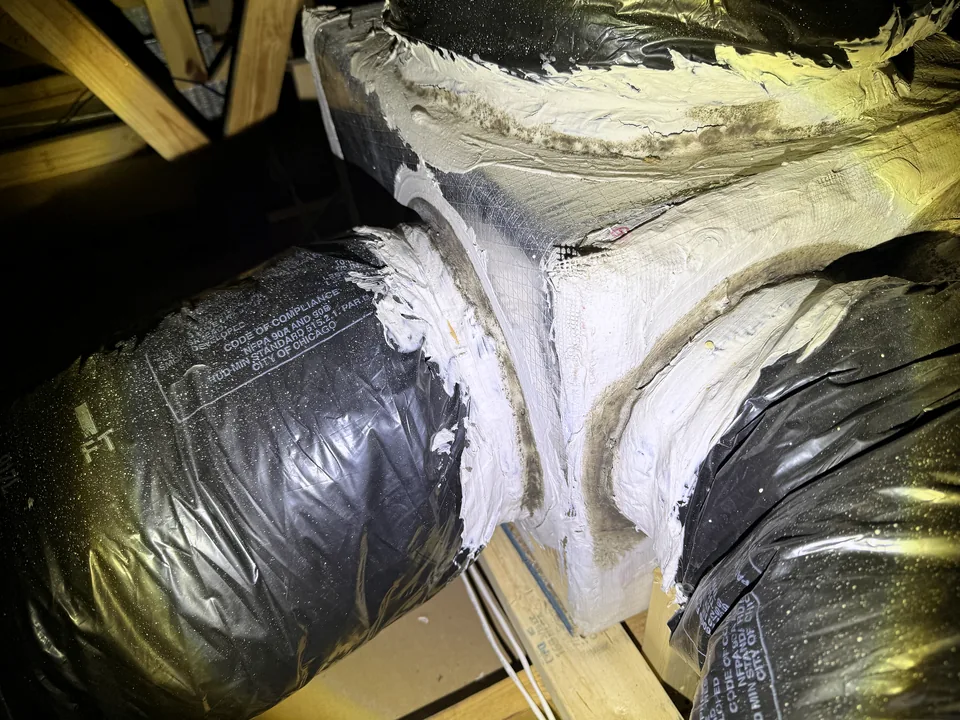
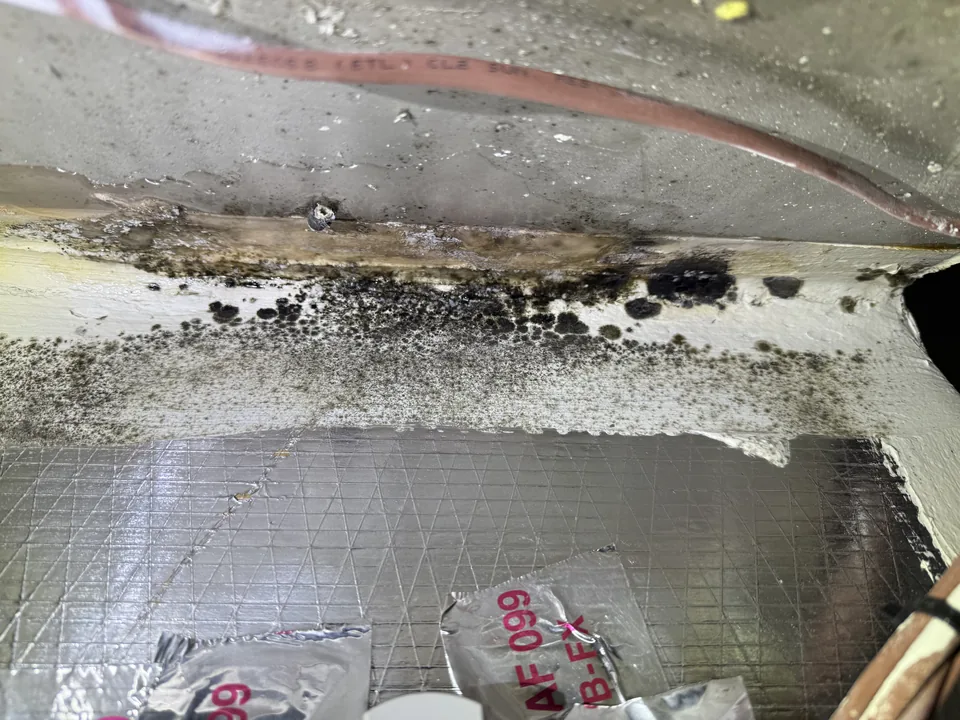
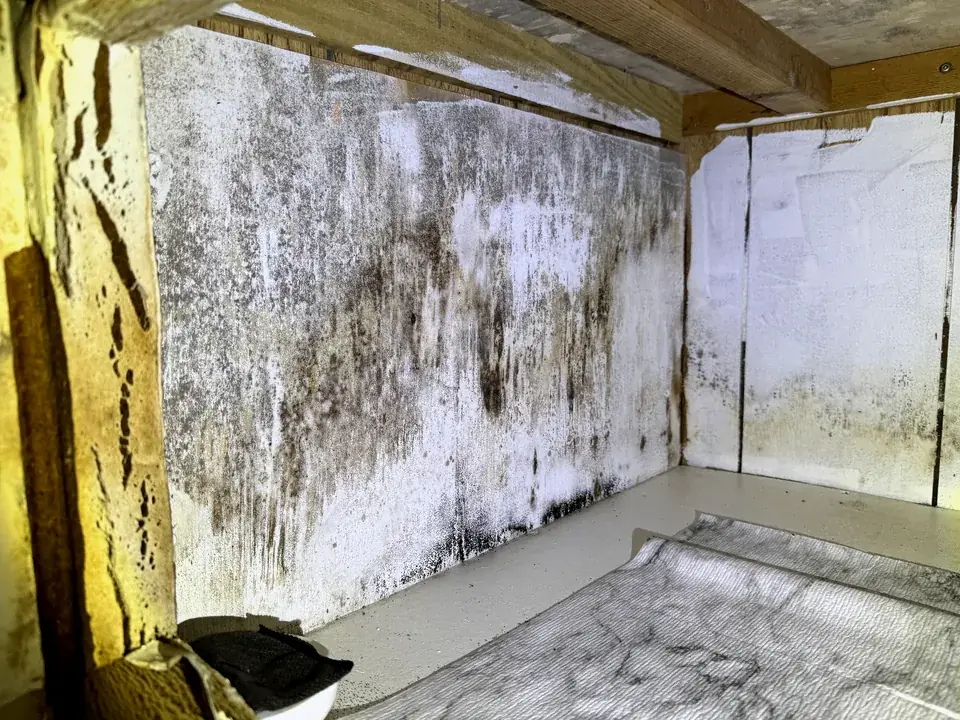
Within assessment scope, and where the equipment is accessible, the observations that matter are the ones that can be seen and measured: the condition of the air handler and its cabinet, the coil and drain pan, the condensate line and its trap, plenum and duct connections, supply and return pathways, visible air leakage at connections, filter seating and any bypass around it, and whether humidity readings differ between areas that should be comparable. Where something points to a mechanical fault rather than an environmental condition, that belongs with a licensed air conditioning contractor and the report says so. I assess the environment; I do not diagnose equipment.
Related reading on how a system becomes a source rather than a victim: how mold and microbes colonize an HVAC system and why Florida air conditioners short-cycle. Where a property is only used part of the year, the second-home checks apply to the areas that sit unoccupied.
What an accessible attic can show that the rooms below cannot
In much of the Central Florida housing stock the air handler sits in the attic, which puts the coil, the drain pan and the duct connections above the finished ceiling. Where the attic can be entered safely and is within scope, it is assessed directly: sheathing and framing condition, insulation coverage and irregularities, evidence of past or current moisture staining, condensation on cold surfaces, air leakage pathways between the attic and the conditioned space below, and any suspected microbial growth. Where a space cannot be entered safely, the report states that plainly rather than leaving it to look as though it was covered. See also attic air leaks and condensation at the ceiling plane.
Lakefront property
What actually changes when a property is lakefront?
A lakefront address does not by itself establish that a property has an indoor moisture or mold problem, and I am not going to suggest otherwise. Windermere sits among the Butler Chain of Lakes, and that is part of what makes it what it is. It is not a finding.
What changes is the building, and the building is what gets assessed. A property on the water often has features that are worth examining on their own terms: extensive glazed door and window assemblies and the way they are flashed and drained, more exposure to wind-driven rain on the water-facing elevation, exterior penetrations for outdoor kitchens, lighting and irrigation, site drainage and how water moves away from the structure, irrigation heads directed at the walls, and roof conditions observable within scope. Any of those may or may not be relevant on a given property. Evidence decides, not the address.
Where there is a history of water intrusion, that history is worth more than any assumption about geography. A documented leak, a repaired roof, a replaced window, a stain someone noticed two summers ago: those are the starting points, and what happens in the first 24 to 72 hours after water damage often explains what is found later.
Pools, lanais and the line between conditioned and unconditioned space
Where a property has a pool, a covered lanai, large sliding assemblies, an outdoor kitchen, a pool bathroom or a cabana, it has more interfaces between conditioned and unconditioned space than a simpler building does. The building-science point is narrow and worth stating carefully: more interfaces means more locations that may warrant evaluation when there is evidence of a moisture concern. It does not mean these features cause problems. Door thresholds, wall and ceiling transitions, adjacent interior finishes and the plumbing serving those spaces are simply places where evidence can appear, and they are examined when the findings point there.
Before you buy
Buying a large property in Windermere
A home inspection and an environmental assessment answer different questions. A home inspection covers the condition and function of the property's systems and components across a wide scope. An environmental assessment asks a narrower question in more depth: whether there is evidence of moisture where it should not be, and what that evidence means. Both are worth having. Neither replaces the other, and this is not a criticism of home inspectors.
On a larger property the questions a buyer cannot answer from a walkthrough tend to be the same ones: what the moisture history is, whether previous water events were repaired and how, whether any remediation was done and whether it was ever verified independently, how many systems there are and how they have been maintained, whether parts of the property have been sitting unoccupied, and whether areas exist that a single indoor air sample would not represent. Those are answerable, but only by looking. See adding a mold inspection to a Central Florida contingency for how this fits a transaction timeline.
How renovations change what an assessor can see
Renovation changes the visible history of a building. New flooring may sit over an older substrate, replacement cabinetry may sit against an older wall assembly, a bathroom may have been remodeled after a leak was repaired, finishes may have been repainted, and systems may have been replaced or rerouted. None of that implies anything was concealed. Most renovation is exactly what it appears to be.
What it does mean is that a surface can no longer be read as a record. So the assessment leans on the things that are still legible: moisture measurements in the materials themselves, thermal anomalies where they help direct attention, documented history and permits where they are available, and targeted investigation where the evidence justifies it. Thermal imaging is worth being precise about here. It reports surface temperature differences, which is to say anomalies worth investigating. It does not find mold, and no camera at any price does. That limit is set out in what thermal imaging can and cannot show.
Sampling
Does every Windermere mold inspection need sampling?
A complete inspection includes three accredited-laboratory samples, and where they go rests on the objective, the conditions found on the day, the building's history and professional judgment. Where growth is visible and the moisture source is identified, a sample often confirms what is already established rather than changing what happens next. Where the question is what is in the air, whether a surface is what it appears to be, or what is inside an assembly, the appropriate method answers it: air, surface or a targeted cavity sample. Three accredited-laboratory samples are included with a complete inspection and placed where the findings point. Full method detail lives on mold testing.
Specialty panels are available where a specific question calls for one, most often at a clinician's request: mycotoxin, ERMI and HERTSMI-2. Where a recent renovation, new finishes or a specific chemical odor is the concern rather than mold, VOC and formaldehyde analysis answers a different question and can be collected on the same visit.
PureSpec also performs independent post-remediation verification and never performs remediation.
Scope
What a Windermere assessment accounts for.
Left, something that can vary across a property. Right, what that variation changes about the assessment. Where none of it applies, the assessment is simpler, and it is scoped that way.
-
More than one system or zone
Conditions are established per area rather than inferred from one location, because separately conditioned space can behave separately.
-
More than one attic area, or none that can be entered
Each accessible space is assessed on its own. Anything that cannot be reached safely is named in the report as not reached.
-
A known history of water intrusion or repair
The visit starts there rather than at the front door, and measurement is concentrated where the history points.
-
Areas held at different temperatures or left unoccupied
Those areas are read on their own terms, since a comfortable main-floor reading says little about a wing nobody is using.
-
Detached conditioned structures, where in scope
Treated as separate environmental areas with their own equipment, occupancy and history.
Daniel performs every assessment personally. There are no subcontracted inspectors and no technician sent in his place. About Daniel
Where we work in Windermere
From single-family homes to commercial buildings.
-

RESIDENTIAL Residential Mold Inspection
Single-family homes, townhouses, and condos across Windermere, full-property and limited-scope assessments by a state-licensed mold assessor.
-
COMMERCIAL Commercial Mold Assessment
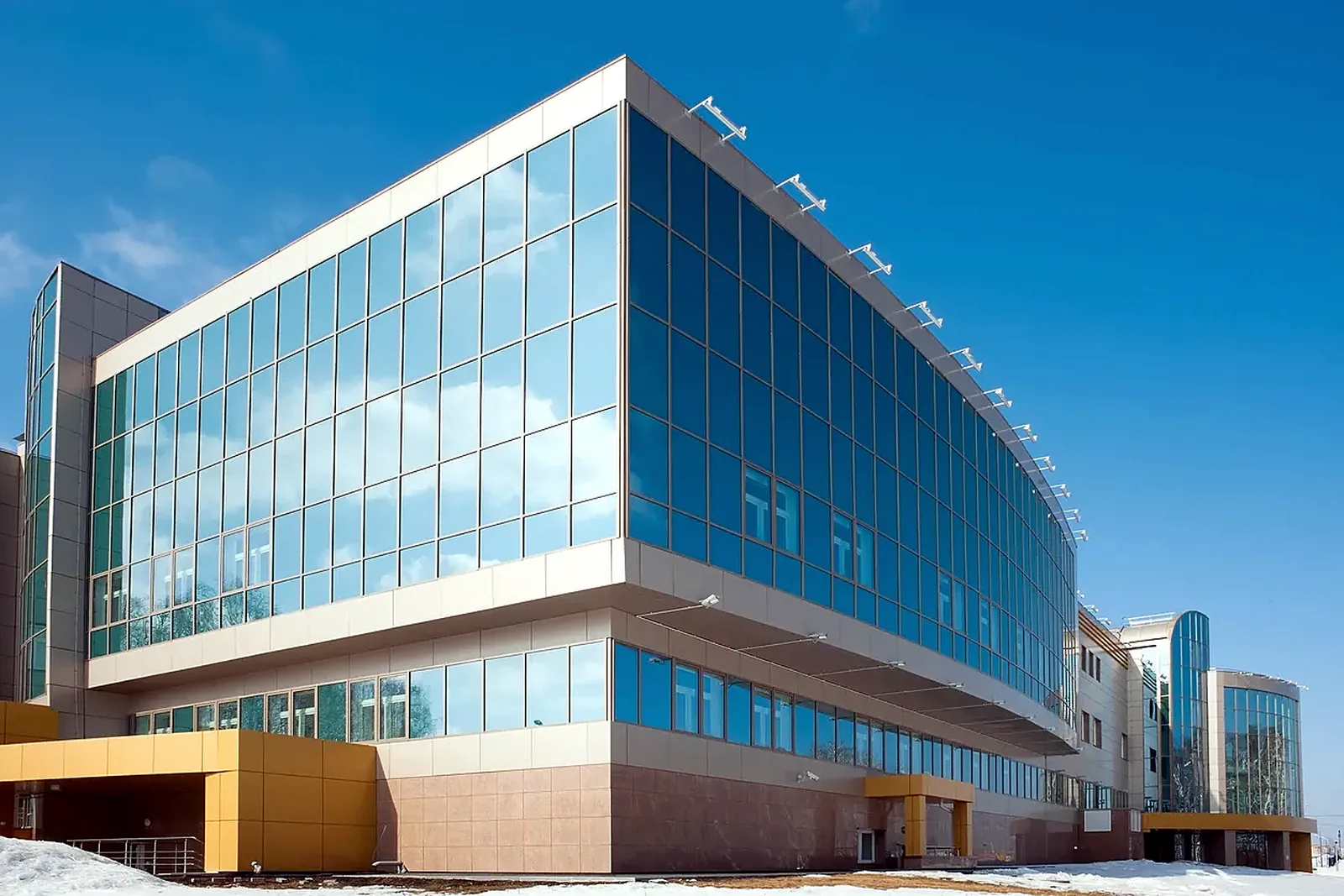
Office, retail, healthcare, school, and hospitality buildings across the Windermere metro, reporting structured for property managers, insurers, and OSHA-aware contexts.
-

APARTMENT Apartment / Tenant Mold Inspection
Independent third-party documentation built for renters dealing with landlords and property managers across Windermere-area multifamily housing.
Which service you need
What each PureSpec service answers in Windermere.
Find the question closest to yours. Every service is performed personally by Daniel Melendez, a microbiologist and former environmental laboratory analyst, and every sample ships to an AIHA-LAP-accredited third-party laboratory under chain of custody.
“My property has several systems and areas. Where does an assessment even start?”
“I am buying here and I want to know the moisture history before I close.”
“One wing feels different from the rest of the house.”
“How do I get the air in my house tested for mold?”
“I can see something dark on a surface. Can you tell me what it is?”
“I already know where the problem is, I just need it documented.”
“Remediation has finished. Who checks it independently?”
“Is it black mold? Can you test for Stachybotrys specifically?”
“My doctor mentioned ERMI or HERTSMI-2 testing. What is that?”
“I tested positive for mycotoxins. Where did they come from?”
“We just finished a renovation and something smells chemical, not musty.”
“We are building. Can anything be checked before the drywall goes up?”
“This is a commercial building, not a house.”
Specialty testing is usually requested by clients already working with a practitioner who has asked for a specific result. The environmental data is the part PureSpec supplies; the interpretation belongs with the clinician who asked for it.
Coverage
Windermere, and the 34786 communities around it.
PureSpec serves properties inside the Town of Windermere as well as the surrounding 34786 communities in unincorporated Orange County. That distinction matters more here than in most places: the incorporated town is small, and a great deal of property carrying a Windermere address, including Keene's Pointe and Casabella at Windermere, sits outside the town limits in unincorporated Orange County. Isleworth, Reserve at Lake Butler Sound and the communities along the Butler Chain of Lakes are all inside the service area, at no travel surcharge anywhere in Orange County.
Don’t see your neighborhood? Call (321) 324-7756, Daniel covers every part of the metro.
Common questions
Windermere questions, answered.
What does a mold inspection in Windermere include?
An independent assessment of the property's moisture conditions: a visual assessment of accessible areas, moisture measurements on surfaces and materials, thermal imaging used as a screening tool, observations of the air conditioning system and accessible attic areas where present, and a review of the building's history and any evidence of past water intrusion. Three accredited-laboratory samples are included with a complete inspection, placed where the findings point. The report states what was reached and what was not.
Can one air sample represent a large home?
An air sample reports the airborne spore concentration at one location over the sampling period, against a same-day outdoor reference. It does not report on an attic, a wall or floor cavity, the interior of an air conditioning system, another floor, another zone or a detached structure unless those areas are separately evaluated by a suitable method. Where a property has areas that differ materially from one another, the sampling strategy follows the question rather than a fixed package.
Do you inspect HVAC systems and accessible attic areas?
Yes, within assessment scope and where the equipment and spaces are accessible. That covers the air handler and its cabinet, coil and drain pan, condensate line, plenum and duct connections, supply and return pathways, and attic conditions including sheathing, insulation, moisture staining and air leakage pathways. This is environmental assessment, not mechanical diagnosis. Where something points to a mechanical fault, that belongs with a licensed air conditioning contractor and the report says so.
Does every mold inspection require sampling?
A complete inspection includes three accredited-laboratory samples, placed where the assessment points. Their placement depends on the objective, the conditions found on the day, the building's history and professional judgment. Where growth is visible and the moisture source is identified, a sample often confirms what is already established rather than changing what happens next.
Should I get a mold inspection before buying a Windermere home?
A home inspection and an environmental assessment answer different questions, and on a larger property the environmental question is harder to answer from a walkthrough. Moisture history, how previous water events were repaired, whether any remediation was verified independently, how many systems there are, and whether parts of the property sit unoccupied are all things a buyer cannot see. They are answerable, but only by looking.
Do you perform post-remediation verification?
Yes, and independently. PureSpec does not perform or subcontract the remediation it verifies, which is the point of having a separate assessor do it. Verification is documented as its own assessment with its own findings.
Nearby cities & towns
Available services