
Indoor Air Quality
Indoor air quality testing and investigation.
A microbiologist-led indoor air quality investigation for Orlando and Central Florida homes and commercial buildings. One assessment, the full panel range: mold, VOCs, formaldehyde, mycotoxins (including EMMA), ERMI, endotoxins, and allergens, analyzed by AIHA-LAP accredited laboratories. The goal is to identify which contaminant is actually degrading your air, not just whether mold is present.
Standard coverage includes Orange, Seminole, Lake, Osceola and Polk counties. For properties outside these counties, contact PureSpec for a written quote before booking. Any travel charge is disclosed in your written quote.
What is an indoor air quality investigation?
An indoor air quality investigation is a structured assessment of the air inside a building to identify which airborne contaminants are present in the samples and to investigate likely sources. It combines a moisture and building-science inspection with targeted laboratory testing across mold spores, VOCs, formaldehyde, mycotoxins, endotoxins, and allergens, so the report names which contaminant classes were measured and where, rather than testing for mold and stopping there. That breadth is the point. A building can return an unremarkable mold panel while other contaminants, such as chemical off-gassing from new flooring or glass fibers shed from duct insulation, are present. Testing is targeted to the question and the field conditions rather than run as a fixed battery, and on-site screening readings are reported separately from laboratory results. In Florida the work is performed by a licensed mold assessor under chain of custody with AIHA-LAP accredited laboratory analysis.
The panels
Seven indoor air quality panels, one investigation.
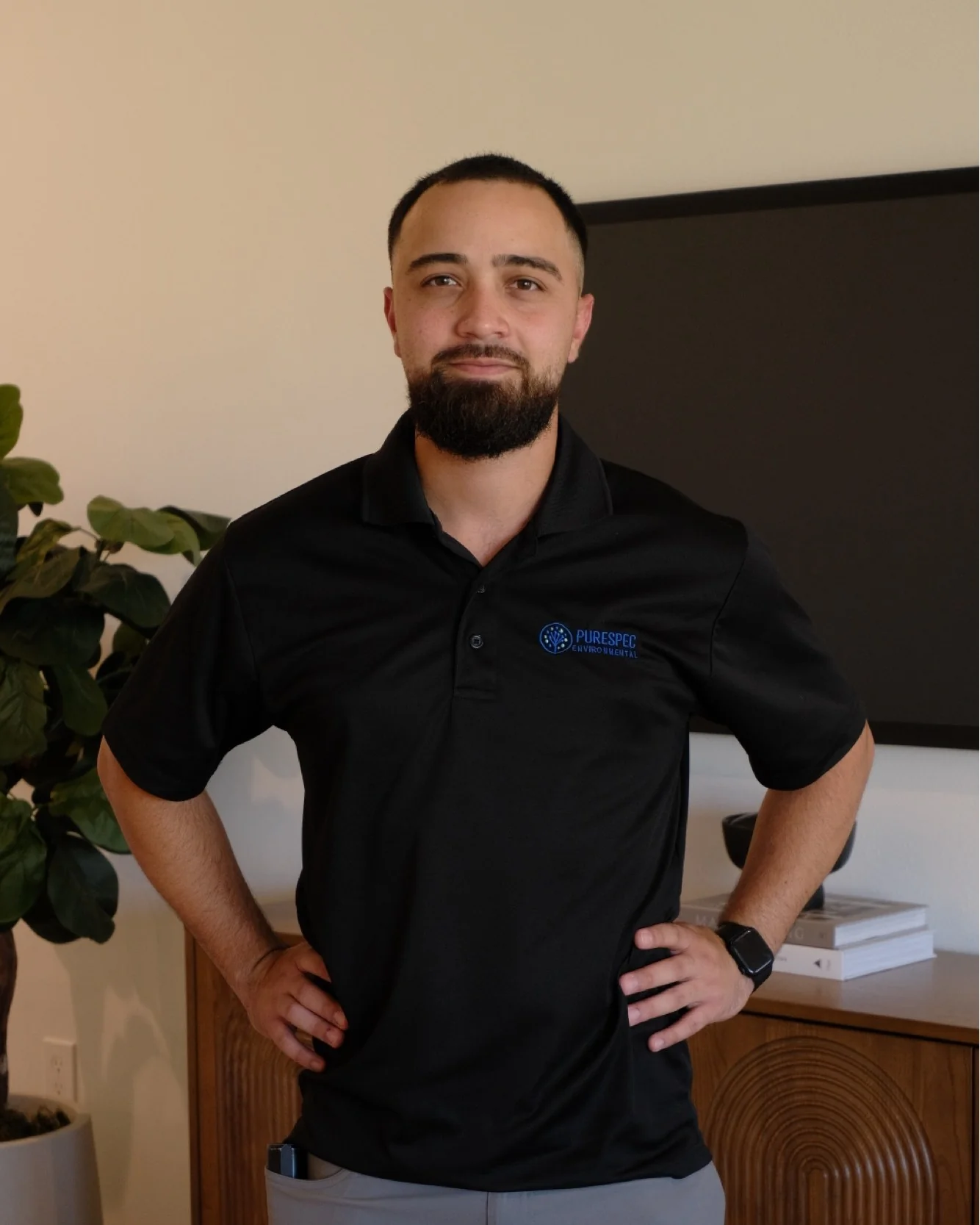
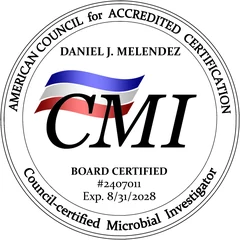
Most companies that advertise air quality testing check for mold and stop. An indoor air quality investigation asks a harder question: of everything that could be degrading this air, which is it? Daniel selects from the full panel range based on your symptoms, the building, and what the moisture inspection finds, then interprets the lab data as a microbiologist and former lab analyst.
- Mold air & surface testing. Spore-trap air sampling and surface or cavity swabs to detect and identify active microbial growth.
- VOC testing. Volatile organic compounds from off-gassing materials, cleaning products, and combustion, by GC-MS.
- Formaldehyde testing. A specific irritant common in new construction, cabinetry, and flooring, measured on its own scale.
- Mycotoxin testing, including EMMA. Compounds some molds produce, measured in dust, air or surface samples; healthcare providers sometimes request it. Includes the EMMA (Environmental Mold and Mycotoxin Assessment) dust panel, alongside AMEA and MESA.
- ERMI & HERTSMI-2. DNA-based dust analysis that scores a settled-dust sample against EPA reference data; EPA describes ERMI as a research tool.
- Endotoxin testing. Bacterial cell-wall fragments in dust or water samples, which a mold-only test does not report.
- Allergen testing. Laboratory identification of pollen and other plant material, skin cells, hair, insect parts and mites, fungal hyphal fragments, and cellulose, glass and synthetic fibers in collected samples.
When you need it
When is an IAQ investigation the right fit?
- Symptoms that clear when you leave the building and return when you come back
- A mold inspection came back clean but occupants are still unwell
- A physician-referred CIRS or MCAS environmental workup
- New construction, renovation, or new furnishings with lingering chemical odors
- A commercial building with recurring occupant complaints
How it works
How does the process work?
Consultation → Moisture and building-science inspection → Targeted panel sampling → AIHA-LAP accredited lab analysis → Plain-English report naming the contaminant and its source.
Honest answers
Indoor air quality investigation, answered.
How is an IAQ investigation different from a mold test?
A mold test only reports mold. An IAQ investigation looks across mold spores, VOCs, formaldehyde, mycotoxins, endotoxins, and allergens, so the report can name the contaminant class actually affecting occupants rather than confirming an absence.
Do you run every panel on every job?
No. Testing is targeted to the question and the field conditions. Running a fixed battery produces numbers that do not answer the question that was asked.
What if the mold results come back clean?
That is a useful result, and it is often where the investigation gets interesting. Chemical off-gassing from new flooring or glass fibers shed from failing duct insulation do not appear on a mold panel.
Service areas
Serving Orlando and all 67 Florida counties.
Based in Winter Garden in the Orlando metro, PureSpec covers all of Central Florida at standard rates and the rest of the state by custom quote. See the full service area.