Start by separating the evidence
I organize the record into three parts:
| Part | Example |
|---|---|
| Observation | A documented reading or laboratory finding at an identified location |
| Interpretation | What that evidence may support in the building context |
| Limitation | What was not measured, seen or resolved |
This prevents an interpretation from quietly becoming a fact.
For example, an elevated reading near a window is an observation. Water entry at that window may be a hypothesis. The precise concealed pathway may remain unknown.
What if the air result is low but the wall is wet?
The two findings address different questions. NIOSH cautions about the limits of short-term mold samples, while EPA describes hidden locations and moisture investigation as important parts of building evaluation.[4][2]
I would review how the material was measured, what the air sample represented and what access was available. A further material or access question may be more useful than simply repeating an air sample in the same place.
This is a hypothetical example, not a claim about a documented PureSpec project.
What if the count is elevated but no moisture was found?
I would not conclude that the result is meaningless. I also would not invent a concealed source to explain it.
The next questions concern sample location, method, relevant operating conditions, comparison data and the accessible inspection record. NIOSH describes substantial variability and limitations in bioaerosol sampling.[3]
“No elevated moisture found in the accessible areas during the visit” is a narrower and more accurate statement than “there has never been a moisture problem.”
What if a suspect surface sample identifies fungal material?
The result belongs to the sampled location and the analytical method. It does not automatically establish the age, extent or source of the condition.
I connect that finding to the available visual record and material measurements. Where surrounding areas were inaccessible, the report should state that rather than assume either widespread involvement or a perfectly contained finding.
EPA’s guidance supports investigating the moisture problem and the extent of relevant findings.[2]
How do I decide what to do next?
I ask what remaining uncertainty would change the recommendation. Then I identify the smallest useful step that can address it within an appropriate scope.
That might be reviewing missing records, obtaining authorized access, collecting a targeted sample or referring a mechanical or building-envelope question to the appropriate professional. More testing is not automatically more explanation.
If the available evidence does not resolve the source, I say so.
What does my background contribute?
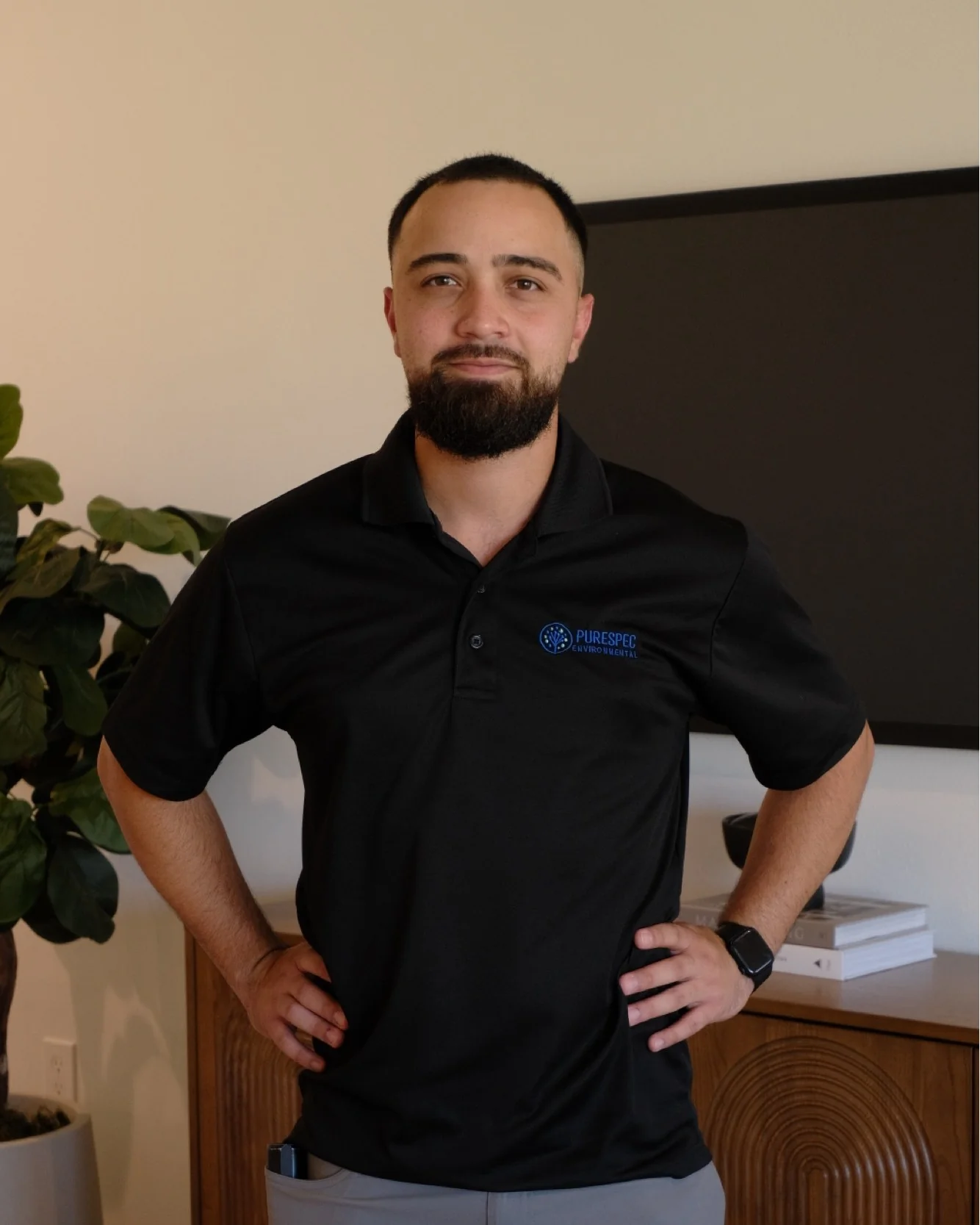
I am Daniel Melendez, founder of PureSpec Environmental. I hold a B.S. in Microbiology, previously worked as an environmental laboratory analyst and hold Florida Mold Assessor license MRSA #4575.
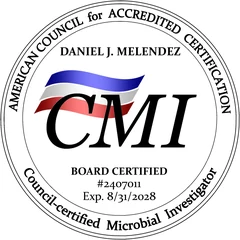
My credentials also include ACAC Council-certified Microbial Investigator, CMI #2407011; NAERMC Certified Mold Hygienist and Green IAQ Specialist; and Certified Pathways Technician.
I personally perform every inspection. The practical value of that background is keeping field observations and laboratory limitations connected in one assessment.
What should the final report provide?
The report should explain what was observed, what the evidence supports, what remains unknown and why any follow-up is recommended. Three laboratory samples are included with a complete PureSpec inspection; specialty testing is separately scoped.
PureSpec is assessment-only and never performs remediation. Contact PureSpec for current availability. The report provides environmental information, not medical conclusions, legal advice or an occupancy determination.
Standard coverage includes Orange, Seminole, Lake, Osceola and Polk counties. For properties outside these counties, contact PureSpec for a written quote before booking. Any travel charge is disclosed in your written quote.
References
- U.S. Environmental Protection Agency. Moisture Control Guidance for Building Design, Construction and Maintenance (2013), especially Chapter 3 and Appendix C.
- U.S. Environmental Protection Agency. Mold Course Chapter 3: Finding Mold and Moisture.
- William G. Lindsley, Brett J. Green, Francoise M. Blachere, Stephen B. Martin, Brandon F. Law, Paul A. Jensen and Millie P. Schafer, NIOSH. Sampling and Characterization of Bioaerosols. NIOSH Manual of Analytical Methods, 5th edition, Chapter BA (2017), especially sections 4, 9 and 10.
- CDC, National Institute for Occupational Safety and Health. Mold, Testing, and Remediation.