Why are Aspergillus and Penicillium grouped together?
Routine microscopy relies on visible features such as size, shape and structure. NIOSH describes the difficulty of separating fungal particles with similar morphology and specifically discusses reporting an Aspergillus/Penicillium group.[1]
The slash does not mean the laboratory identified both genera independently. Nor does it identify a particular species within either genus.
My interpretation should preserve the laboratory’s wording. Replacing “type” with a precise species name would add information the analysis did not provide.
How does an air sample differ from a surface sample?
An air sample collects material suspended at the selected location during the collection interval. A surface sample examines material collected from an identified surface.[2]
That difference affects the question being answered:
- An air result can describe collected airborne fungal structures.
- A surface result can help characterize suspect material at the sampled spot.
- Neither result automatically describes an entire wall assembly or every room.
Surface material may contain structures that help identification, but damaged, sparse or mixed material can still limit the result. A tape lift is not a guarantee of species-level resolution.
Does nonviable mean every spore was dead?
No. In this context, “nonviable” describes an analytical approach that does not depend on growing the collected organisms in culture. Routine direct microscopic counts do not distinguish living from dead spores.[1]
Culture is different, but it is not a complete census of everything living in the building. Its result depends on what grows under the selected laboratory conditions. Molecular methods target genetic material and have their own scope and limitations.[1]
The important question is what information is needed, not which test sounds more advanced.
What if the report lists Stachybotrys?
Read the identification exactly as reported and connect it to the sampled location. Do not convert a category on a laboratory report into a diagnosis of a building or its occupants.
Likewise, a short air sample that does not report a particular type does not establish that the type is absent from every concealed material. NIOSH cautions that short sampling periods and negative findings have important limitations.[3]
I would review accessible moisture findings, the collection method and the original reason for sampling before recommending further investigation.
Should every suspect surface be sampled?
No. EPA states that visible mold often does not require sampling and emphasizes choosing testing that can affect a decision.[4]
If the purpose is to distinguish a suspect deposit from fungal material, sampling may answer a useful question. If the unresolved concern is how water entered a wall, identification alone will not solve it.
A complete PureSpec inspection includes three laboratory samples. Their locations and methods are selected in relation to the investigation rather than used to claim every possible fungal type has been excluded.
How should the result appear in the assessment?
The report should identify the sample location, collection method, laboratory result, relevant field observations and unresolved limitations. It should distinguish what the laboratory found from what the assessor infers.
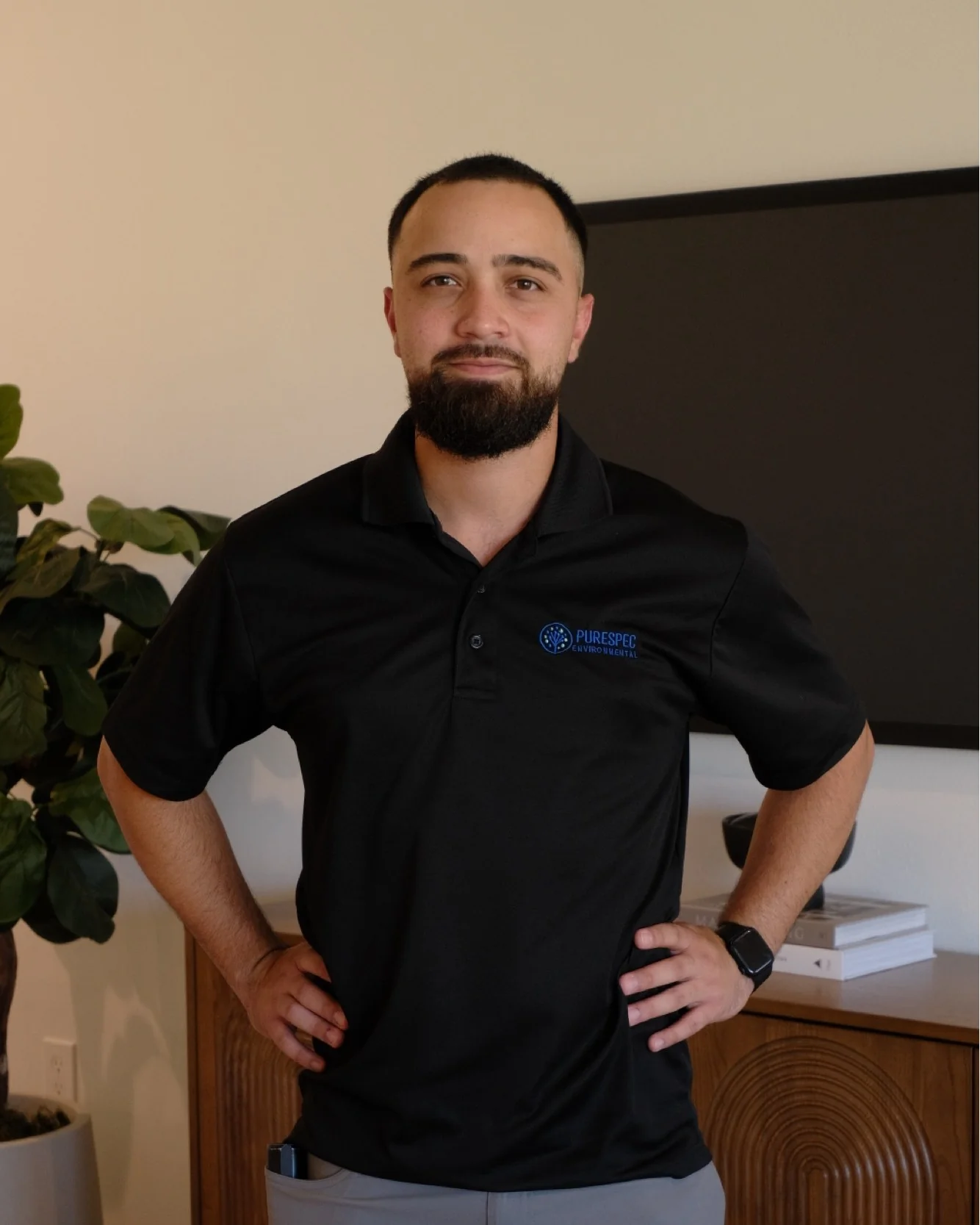
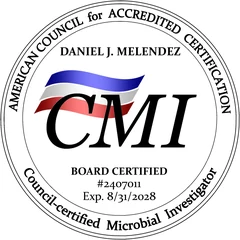
Daniel Melendez personally performs every PureSpec inspection. PureSpec provides independent environmental assessment and testing only and never performs remediation. Contact PureSpec for current availability. Health questions belong with a licensed healthcare provider.
Standard coverage includes Orange, Seminole, Lake, Osceola and Polk counties. For properties outside these counties, contact PureSpec for a written quote before booking. Any travel charge is disclosed in your written quote.
References
- William G. Lindsley, Brett J. Green, Francoise M. Blachere, Stephen B. Martin, Brandon F. Law, Paul A. Jensen and Millie P. Schafer, NIOSH. Sampling and Characterization of Bioaerosols. NIOSH Manual of Analytical Methods, 5th edition, Chapter BA (2017), especially sections 4, 9 and 10.
- U.S. Environmental Protection Agency. Mold Course Chapter 3: Finding Mold and Moisture.
- CDC, National Institute for Occupational Safety and Health. Mold, Testing, and Remediation.
- U.S. Environmental Protection Agency. Mold Testing or Sampling.