1. Find the boundaries of the assignment
Look for identified rooms, work areas or assemblies. Check whether the report describes the entire property or only a specific remediation area.
A limited evaluation can be appropriate. The problem occurs when its conclusion is silently expanded beyond the area examined.
Ask which locations were inaccessible and whether finishes or other conditions limited observation.
2. Identify the criteria used
The report should explain the basis of evaluation. That may include the relevant project documents, observations, moisture criteria and any defined sampling objectives.
A result cannot be interpreted responsibly if the criterion is only an unexplained label. Ask whether the criterion is project-specific, a laboratory interpretation or something else.
Do not assume an airborne number is an official government pass/fail limit.[2]
3. Separate observations from inferences
An observation might identify remaining debris at a particular location or a moisture reading on a stated material. An inference explains what those findings may mean.
Both can be useful, but they should be distinguishable. A report should not present a hypothesis about a concealed source as though it was directly observed.
A moisture meter helps investigate moisture conditions; it does not identify mold or independently set a demolition boundary.[3]
4. Read the laboratory pages with the field record
Check sample locations, collection methods, units, laboratory qualifiers and the comparison used. Routine microscopy may report groups rather than species.[4]
Then ask how those results relate to the photographed and measured conditions. A laboratory page should not be expected to explain the building on its own.
If sampling was not part of the scope, the report should not imply that laboratory criteria were evaluated.
5. Check the limitations beside the conclusion
Important limitations belong where a reader can understand their effect. They should not be hidden behind an expansive headline.
Examples include inaccessible cavities, incomplete project records or sampling limited to selected locations. The report should explain whether a limitation leaves a specific question unresolved.
A finding about the visit does not establish that the property cannot develop a new moisture problem.
6. Understand the assessor’s role
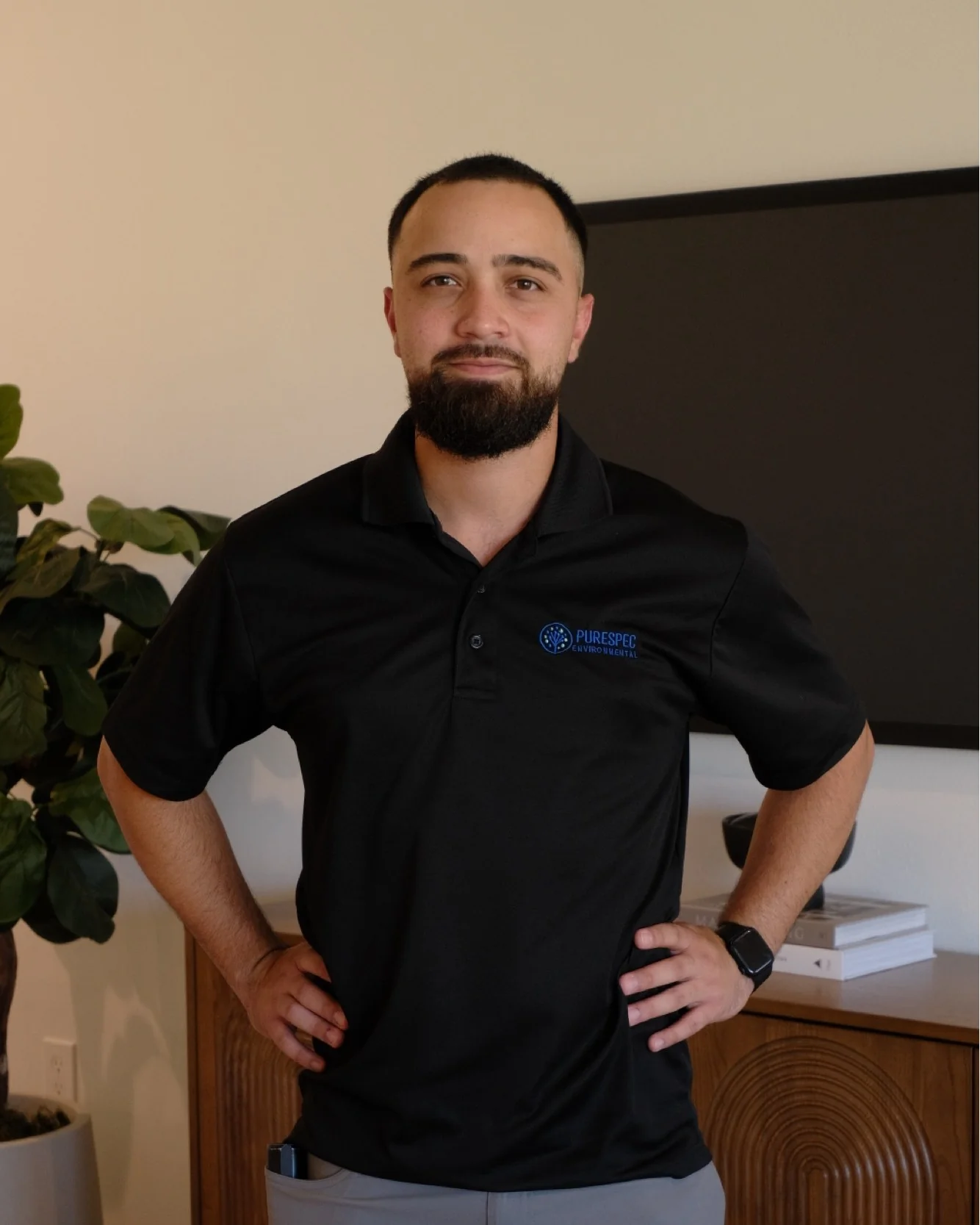
At PureSpec, I personally perform the assessment and interpret its findings. The company never performs remediation. That is a clear description of the business model, not an accusation about another provider.
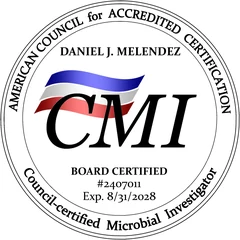
My B.S. in Microbiology and prior environmental laboratory work inform how I evaluate methods and their limits. My Florida Mold Assessor license is MRSA #4575; my ACAC Council-certified Microbial Investigator credential is CMI #2407011.
What if the report leaves you unsure?
Ask the issuing assessor to explain the scope, criteria and unsupported assumptions before ordering another sample. If the environmental question remains unresolved, discuss a clearly defined follow-up assessment.
Contact PureSpec for current availability. Questions about contractual or legal consequences belong with an appropriate legal professional. Questions about health belong with a licensed healthcare provider.
Standard coverage includes Orange, Seminole, Lake, Osceola and Polk counties. For properties outside these counties, contact PureSpec for a written quote before booking. Any travel charge is disclosed in your written quote.
References
- U.S. Environmental Protection Agency. Mold Remediation in Schools and Commercial Buildings Guide: Chapter 3, Investigating, Evaluating and Remediating Moisture and Mold Problems.
- U.S. Environmental Protection Agency. Mold Testing or Sampling.
- U.S. Environmental Protection Agency. Moisture Control Guidance for Building Design, Construction and Maintenance (2013), especially Chapter 3 and Appendix C.
- William G. Lindsley, Brett J. Green, Francoise M. Blachere, Stephen B. Martin, Brandon F. Law, Paul A. Jensen and Millie P. Schafer, NIOSH. Sampling and Characterization of Bioaerosols. NIOSH Manual of Analytical Methods, 5th edition, Chapter BA (2017), especially sections 4, 9 and 10.