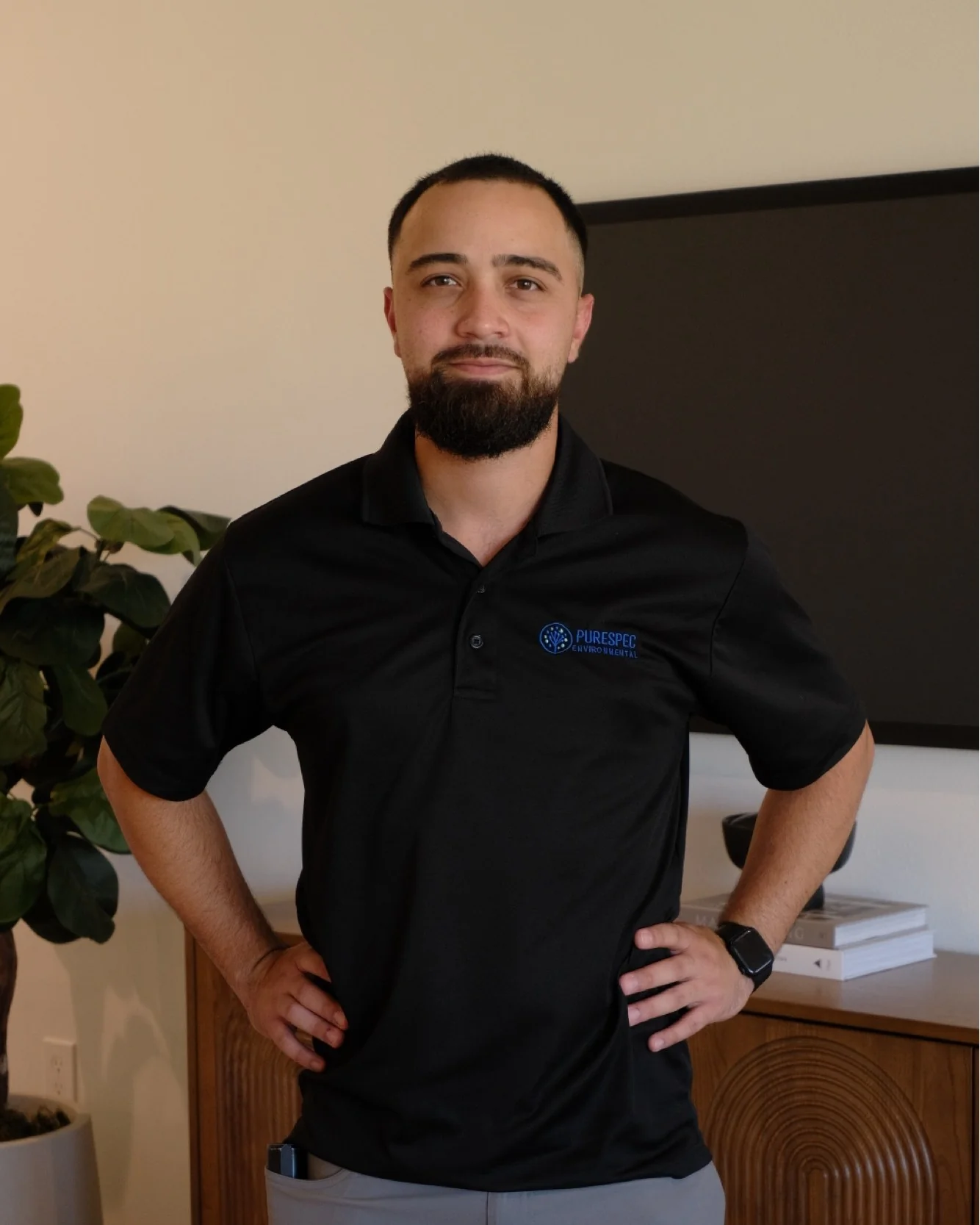
Groveland is a short drive from the Orlando metro, and over the last few years I have watched it become one of the fastest-growing cities in the whole state, and that growth has done something unusual to the mold picture out here. In the same afternoon I can inspect a house that is six weeks old and a house that is sixty years old, and they carry almost opposite moisture problems.
That split is the whole story of south Lake County right now. On one side you have brand-new subdivisions rising out of former citrus groves, built fast and sealed tight. On the other you have older rural homesteads scattered along the Green Swamp edge and out toward Cherry Lake, most of them on private wells with systems that have been quietly aging for decades. Let me walk through both, because the right assessment looks very different depending on which Groveland home you own.
What happens when new homes go up on old citrus ground?
A lot of the new construction in Groveland sits on land that grew oranges for generations. That history matters more than people expect. Groves were graded, irrigated, and shaped for agriculture, and when a builder clears the trees and drops hundreds of homes on that ground in a hurry, the drainage and the soil moisture do not always cooperate with a modern slab and a tight envelope.
The bigger issue is pace. When homes go up fast, materials get closed in fast. Lumber, drywall, and a freshly poured slab all carry water, and a curing slab keeps giving off moisture for months. In an older, leakier house that moisture had somewhere to escape. Today’s energy-efficient envelopes are wonderful at holding conditioned air, and they hold trapped construction moisture just as well. Seal it in behind new paint and new flooring, add an HVAC system that has never been balanced for real-world humidity, and you have created the conditions where mold can begin, even in a home that still smells new.
Why does a pre-drywall look pay off?
The single best moment to catch a new-build problem is before the walls close. Once the drywall is up, everything I would want to see, the framing, the moisture readings, the way the envelope is coming together, disappears behind finished surfaces. A pre-drywall mold inspection lets me document conditions while they are still visible and still fixable, independent of the builder and working only for you.
If your home is already finished, the next best step is a first-year assessment. Trapped moisture and an HVAC system that cools without truly dehumidifying tend to reveal themselves in that first Florida summer. I explain the slab side of this in Florida slab-on-grade moisture, and for a full read of a new home I usually recommend an entire-property mold inspection that covers the envelope, the air, and every space moisture likes to hide.
How do rural Groveland homesteads differ?
Drive out toward the Green Swamp edge, Cherry Lake, or the stretches between Groveland and Mascotte, and the housing changes completely. These are older rural homes on larger lots, often shaded by mature trees, frequently added onto over the years, and almost always on a private well and septic. Each of those traits carries its own moisture story.
Additions are a common weak point, because they join old construction to newer construction, and the seams between the two are where water and air like to sneak in. Heavy tree cover holds moisture against the structure and keeps roofs and north walls from drying out. And the systems out here, the HVAC and the ductwork, are often original or close to it, which means they may be cooling the house without pulling enough humidity out of the air.
Who is responsible for well water quality?
The part rural owners underestimate most is the water. On a private well, no city utility is testing what comes into your home. That water quality is entirely the owner’s responsibility to understand, and it becomes a formal requirement in many transactions.
If you are buying a rural Groveland home with an FHA or VA loan, the lender will very likely require well water testing, and it is smart practice regardless of the loan. Our FHA and VA water testing covers exactly what those closings need. Watch for the things aging rural homes tend to hide:
- Additions and enclosed porches where old and new framing meet, and where a room was added without matching the original envelope or drainage.
- Original HVAC and ductwork that may be short-cycling, sweating, or running past its useful life, so it chills the air without drying it.
- Deep shade and mature trees holding moisture against roofs, siding, and the north side of the house long after a rain.
- Private well water that no one has tested, which matters for a loan and for the family living there.
- Past leaks or storm damage that were patched cosmetically but never dried out properly behind the surface.
Why is humidity the constant in both?
New or old, grove subdivision or swamp-edge homestead, one thing never changes in Central Florida: the air is wet. Warm, humid outdoor air is the fuel for nearly every indoor mold problem I find, and it does not care how new your house is or how large your lot is. Give that moisture a cool surface and time to sit, and you get condensation, and condensation is where mold begins. I go deeper on this in Florida humidity and mold.
The quiet culprit is usually the air conditioner. Cooling and dehumidifying are not the same job, and a system that is oversized or short-cycling hits the thermostat and shuts off before it has removed enough water from the air. An independent HVAC health check is the fastest way to confirm your system is actually drying the house. And if there has already been a leak or a storm event, my guide to mold after water damage is worth a read.
How to start
South Lake County is a short drive from the Orlando metro, so response is fast whether you are in a new Groveland subdivision, out toward Cherry Lake and the Green Swamp edge, or nearby in Minneola. Call or text me at (321) 324-7756, or email through the site to book a visit. Tell me whether your home is new construction or an older rural property, whether you are on city or well water, and what is prompting the call, and I will point you to the right scope. You can read more about the area on my Groveland service area page, or see how I work across Clermont and greater Lake County.
Standard coverage includes Orange, Seminole, Lake, Osceola and Polk counties. For properties outside these counties, contact PureSpec for a written quote before booking. Any travel charge is disclosed in your written quote.
This article is general education about environmental building science and the Central Florida climate. PureSpec Environmental provides mold assessment and testing only. We do not perform remediation, and nothing here is medical or legal advice. For questions about your health, your water, or a real estate contract, please consult the appropriate qualified professional.