What belongs in the initial timeline?
Tell me what changed before the odor was noticed:
- Flooring, cabinetry, coatings or furnishings installed.
- Water events or repairs reported.
- HVAC or ventilation changes.
- Rooms where the concern is noticed.
- Whether the concern varies during ordinary use.
EPA identifies multiple indoor VOC sources, including building materials and household products.[1] A timeline helps prioritize questions, but coincidence does not prove that a particular installation is responsible.
Why does new construction still need a moisture check?
Newness does not document dryness. EPA’s construction guidance addresses moisture-sensitive materials, wetting during construction and drying before enclosure.[3]
That does not mean every new home has a concealed problem. It means I should evaluate relevant evidence rather than dismiss the moisture question because the finishes are new.
An unremarkable air sample also does not establish that every concealed material was examined.[4]
What is different about formaldehyde testing?
Formaldehyde is a specific compound. A test described broadly as “VOC testing” may have a different target list and collection method.
EPA’s TO-11A method, for example, describes collecting formaldehyde on an adsorbent cartridge followed by laboratory analysis using high-performance liquid chromatography.[5] It illustrates why the analytical method matters; it is not a promise that every PureSpec assignment uses that exact procedure.
Before collecting a sample, confirm that the chosen method includes the target and is appropriate for the planned setting.
What can on-site screening tell you?
PureSpec’s complete-property service includes on-site IAQ screening. I keep those readings separate from compound-specific laboratory results.
A screening instrument’s output must be interpreted according to its measurement capabilities and limitations. A broad response should not be relabeled as a laboratory identification of its individual components.
Where a specific chemical question remains, the proposed laboratory scope should name the method, target list and collection conditions.
Could moisture and chemical questions coexist?
Yes. Selecting one line of investigation does not automatically eliminate the other. A room may contain new materials and have an unrelated water concern.
My report should separate the observations: what was installed, what was measured, which materials were accessible, which compounds were tested and what was not evaluated.
That is more useful than a single label such as “new-house smell.”
What result should you expect?
A useful record states locations, methods, conditions, results, limitations and the reasoning behind any recommended follow-up. It does not promise that one panel identifies every source or establishes that the property is safe to occupy.
A complete PureSpec inspection includes three laboratory samples. Specialty VOC and formaldehyde analyses are separate offerings; their scope should be confirmed before collection.
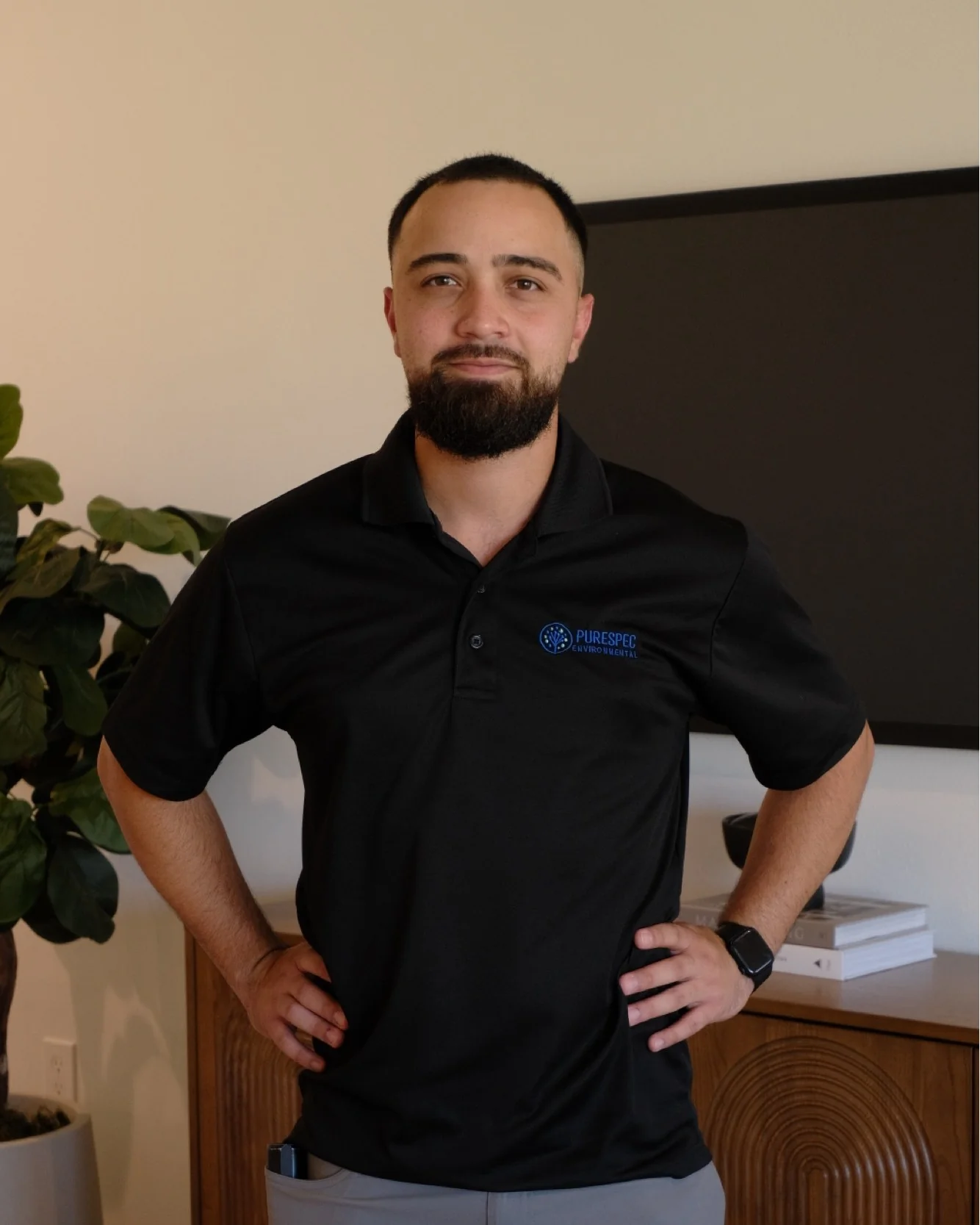
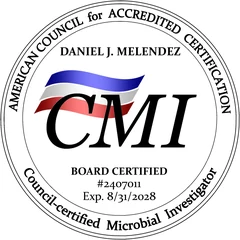
Daniel Melendez personally performs every inspection. PureSpec is assessment-only and never performs remediation. Contact PureSpec for current availability. Standard coverage includes Orange, Seminole, Lake, Osceola and Polk counties; request a written quote for other locations. Health questions belong with a licensed healthcare provider.
References
- U.S. Environmental Protection Agency. Volatile Organic Compounds’ Impact on Indoor Air Quality.
- U.S. Environmental Protection Agency. What should I know about formaldehyde and indoor air quality?.
- U.S. Environmental Protection Agency. Moisture Control Guidance for Building Design, Construction and Maintenance (2013), especially Chapter 3 and Appendix C.
- CDC, National Institute for Occupational Safety and Health. Mold, Testing, and Remediation.
- U.S. Environmental Protection Agency. Compendium Method TO-11A: Determination of Formaldehyde in Ambient Air Using Adsorbent Cartridge Followed by High Performance Liquid Chromatography (HPLC).