
Services · Specialty testing · Certified technician
Pathways™ Testing in Florida.
Microfiber-swab protein sampling that maps how contamination is actually moving through a building. Designed for complete investigations and for clients working through CIRS, MCAS, or environmental sensitivity workups with their healthcare provider.
Standard coverage includes Orange, Seminole, Lake, Osceola and Polk counties. For properties outside these counties, contact PureSpec for a written quote before booking. Any travel charge is disclosed in your written quote.
What is Pathways™ testing?
Pathways™ testing is a microfiber-swab sampling method I use to work out where microbial residue is moving through a building. Swabs are run across structural transition points: outlets, switch plates, baseboard joints, window perimeters, door thresholds, and plumbing and HVAC penetrations. Each swab is sealed, logged under chain-of-custody, and analyzed for the peptide bond, a structural feature common to all proteins, including those left by mold growth and fragments. The reading is total protein load at that location, not a species identification and not a spore count. Taken together, those readings draw a contamination-pathway map. Unlike ERMI and HERTSMI-2, which read DNA from settled dust, Pathways answers a location question. Treating providers sometimes request it, including after a remediation, as environmental data; the result describes the sampled surfaces, not anyone's health. Collection technique determines whether the result is valid, so sampling follows manufacturer protocol by a Certified Pathways Technician. The result is environmental data for the treating provider to interpret.
What it is
A different question from spore-trap testing.
Traditional mold sampling (air cassettes, surface tape lifts, ERMI) tells you what species are present and at what concentration in a sampled area. Pathways™ testing asks a different question: where, structurally, is contamination travelling through the building? Which cracks, electrical penetrations, baseboard joints, and window seals are acting as transport pathways from a hidden source to your living space?
The methodology uses absorbent microfiber swabs to collect surface samples from those structural transition points. The samples are analyzed in an accredited laboratory for protein peptide bonds, a marker that is not species-specific but is strongly indicative of biological residue. Once a hot spot is identified, the Pathways data tells you where to direct conventional sampling and remediation effort, instead of guessing.
Why it matters here
Why Pathways™ fits Florida's building stock and climate.
Florida is not a forgiving testing environment. Dew points stay above 70°F for roughly six months of the year. Most homes were built slab-on-grade with stucco or concrete-block exteriors, both of which trap moisture against framing if a flashing detail fails. Air handlers spend the summer pulling 50°F coil temperatures into 78°F living air, which means condensate has to go somewhere, and on a long enough timeline some of it ends up in the wall behind the unit, the closet floor below it, or the return plenum chase. Then a hurricane like Ian (2022), Idalia (2023), Helene (2024), or Milton (2024) lands a wind-driven rain event on a roof-to-wall transition that was already marginal, and the homeowner ends up with a leak history that no spore trap can fully characterize.
That is the building Pathways™ was built for. When a Florida home has been remediated once, twice, sometimes three times, and the occupants are still reporting symptoms, the contamination is no longer in the obvious places. It is in the assembly cavities the previous round of testing did not sample. A Pathways™ survey treats those cavities as the primary target, not the afterthought, and produces a written map of where the residue is actually concentrated. From there the next remediation cycle can be surgical instead of speculative.
Methodology
How a Pathways™ survey runs.
- Surfaces are sampled around the interior of the building, concentrated at the places contamination travels through: outlets, baseboards, window and door perimeters, plumbing and HVAC penetrations
- Microfiber swabs are sealed and shipped to an accredited Pathways™ lab
- Results return as a contamination-pathway map with hot spots flagged for follow-up
- Daniel writes the interpretation in plain English, with specific recommendations for either targeted remediation or additional species-level sampling at the identified hot spots
Scope
Plan on more than one visit.
One set of samples rarely settles it. A single reading tells me what is on a surface today, not whether it is arriving from somewhere hidden, so I scope this work as repeat sampling of the same locations over time. Comparing those results is what separates a genuine source from ordinary residue, and it is also what tells us whether cleaning is holding.
I scope the number of visits with you on the phone before anything is booked, so you know what you are agreeing to up front. For renters and anyone who cannot renovate, the repeat testing is often the whole point: it shows how often an area has to be cleaned to stay under control.
Limits
What Pathways™ does not do.
I would rather you know the limits before booking than after.
- It does not find everything. A sealed cavity can hold a problem that never reaches a surface where it can be picked up.
- It is not specific to mold. The analysis reads protein, and protein has other everyday sources. An elevated spot means look here, not mold confirmed.
- It is not a demolition order. Findings should be confirmed before anyone opens a wall. Some results turn out to be resolved by cleaning the surface.
- It is a snapshot. Results describe the day they were taken.
- It says nothing about the leak. Whether the moisture problem behind the growth has been fixed is a question for a contractor or building engineer.
- It is not medical. This is environmental data. Health questions belong with your provider.
A few ordinary household things can read as elevated, recent cleaning products among them, so tell me what has been used in the space when you book and I will plan around it.
Method selection
Pathways™ vs ERMI vs HERTSMI-2 vs spore-trap.
Four different tests, four different jobs. Choosing the wrong one is how Florida homeowners end up with three rounds of remediation and no resolution.
- Spore-trap (air cassette). A snapshot of what is airborne in one room at one moment. Useful for documenting acute mold growth or comparing indoor air to outdoor reference. Limited for hidden, intermittent, or assembly-cavity contamination.
- ERMI. A 36-species qPCR panel run on settled house dust. Returns a relative-moldiness score for the entire sampled area. Good screening for water-damage indicator species. Cannot localize where the contamination physically sits.
- HERTSMI-2. A focused five-species subset of ERMI used in CIRS literature as a screening panel. Faster and more interpretable than full ERMI when a clinician needs a narrow water-damage marker set.
- Pathways™. Targets location, not species. Use it when ERMI or HERTSMI-2 has already flagged a problem and the next question is where, or when symptoms persist after remediation and the suspected source is hidden in the wall assembly.
The common pairing in a Florida CIRS workup is HERTSMI-2 for the water-damage marker screen plus Pathways™ for the location question. Together they give both the healthcare provider and the remediation contractor something specific to work from.
Right scenarios
When Pathways™ testing changes the outcome.
- CIRS or MCAS workup where the patient is still symptomatic in their building and a hidden source has not been identified by conventional testing
- Post-water-loss investigations where the visible damage has been repaired but symptoms or odors persist
- Pre-purchase due diligence on a property with a known prior moisture event, when the buyer wants to understand whether residual contamination is moving into living areas
- Multi-family and commercial buildings where shared walls and shared HVAC make tenant-vs-tenant or unit-vs-unit contamination routes a real question
- Renters and anyone who cannot remediate, where the practical question is which surfaces to clean and how often, rather than what to tear out
- Property managers verifying that a turnover clean actually reduced surface contamination before the next tenant moves in
- Repeated remediation that has not resolved the underlying problem, where mapping the actual contamination pathway becomes more useful than another spore-trap sample
What you get
Deliverable.
A written Pathways™ assessment report including the sample map, the per-zone laboratory results, the identified contamination pathways, photos of every sampled location, and a plain-English interpretation. Where appropriate, the report ties the Pathways™ findings back into a recommended species-level or quantitative sampling plan, so your healthcare provider, remediation contractor, or insurance carrier has a well-supported next step rather than a generic "elevated levels" verdict.
Note. PureSpec performs environmental assessment only. Pathways™ testing documents environmental conditions. Interpretation of how environmental data relates to any medical condition is the role of a licensed healthcare provider.
How this service works
How does a Pathways™ test actually work?
Swabs are placed where a building lets material move between assemblies, so the reading is a map of transport rather than a single room's air.
01Map the transition points
Outlets, switch plates, baseboard joints, window perimeters, door thresholds, and plumbing and HVAC penetrations: the places where one assembly meets another.
02Collect the swabs
A microfiber swab is run across each point. Placement is decided by the building, not by a fixed count.
03Seal and log
Every swab is sealed and logged under chain of custody before it leaves the property.
04Laboratory analysis
Each swab is analyzed for the peptide bond, a structural feature common to all proteins, including those left behind by mold growth and fragments.
05Report by location
Results come back as total protein load at each point sampled, so the pattern across the building is readable rather than a single number.
Service areas
Where we perform Pathways™ Testing.
Orlando and Central Florida as the primary market, with statewide Florida projects available based on scope, scheduling, and travel requirements.
Honest answers
Pathways testing, answered.
How is Pathways different from ERMI and HERTSMI-2?
ERMI and HERTSMI-2 read DNA. Pathways detects protein markers, which is why it is used when the question is where contamination sits inside the building rather than how much has accumulated over time.
Why does the technician matter?
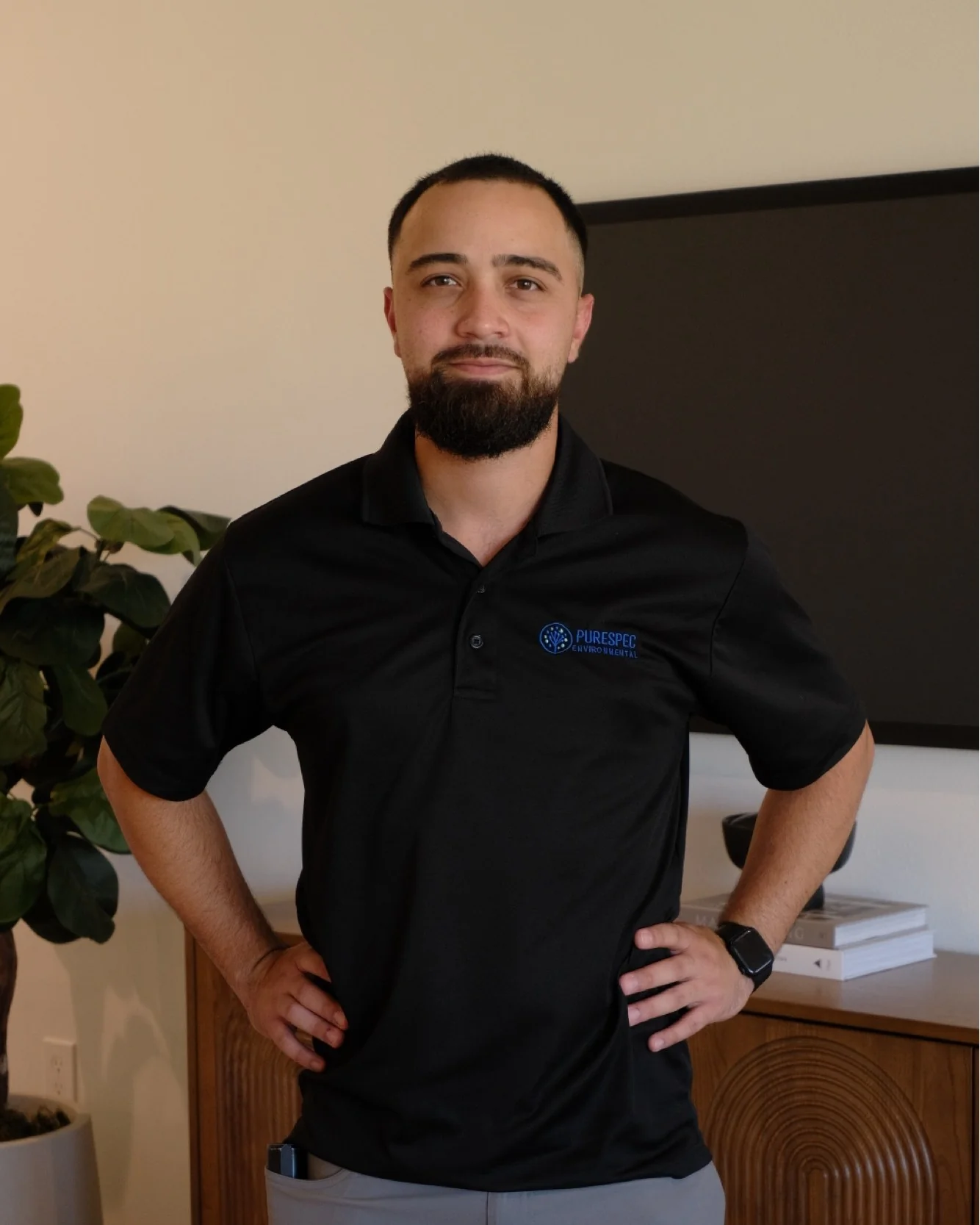
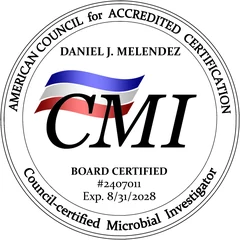
Because collection technique determines whether the result is valid at all. The sample has to be taken exactly to manufacturer protocol, and Daniel is a Certified Pathways Technician.
When is Pathways the right choice?
Most often when symptoms persist after a remediation and a hidden source inside the structure is suspected, or when conventional air sampling has come back unremarkable while the building still does not feel right.
Is Pathways™ testing recognized in Florida?
Florida licenses the mold assessor performing the work, not the individual testing methodology. Daniel Melendez holds Florida Mold Assessor license MRSA #4575 and is a Certified Pathways™ Technician.
Do I need Pathways™ testing after a Florida hurricane?
Not by default. It becomes the right call when the visible damage has been repaired, symptoms persist, or remediation has been repeated without resolution.
Central Florida coverage